Sam tells the story of welcoming Nathan in Florianópolis
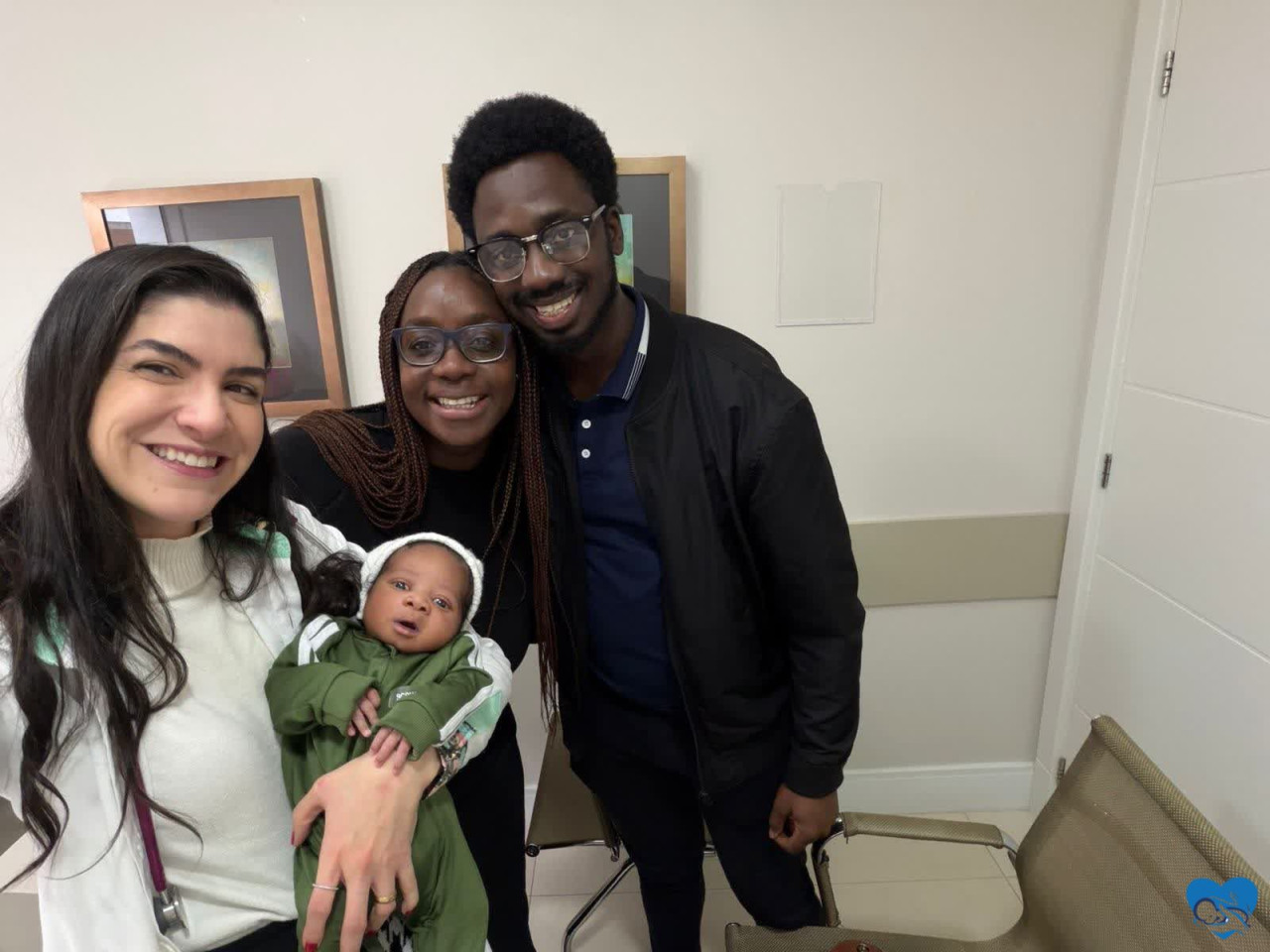
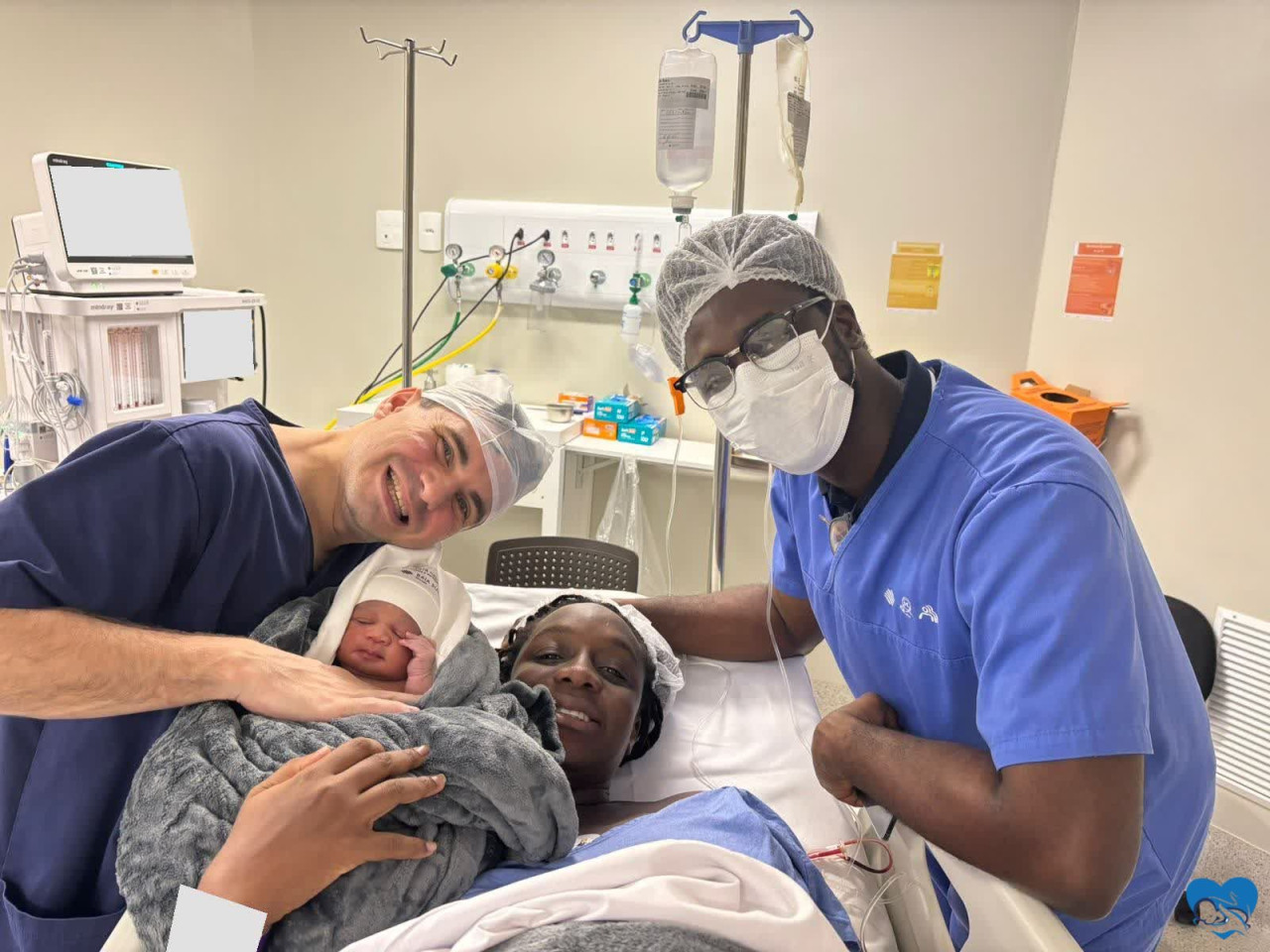
Sam remembers Nathan's first cry. He remembers holding his son, showing him to Ama and watching her cry with joy. Asked about that moment, he says:
"it was almost like time stopped for a minute."
Many questions had led to that first meeting. Before travelling from Nigeria, Sam and Ama had researched countries, checked a doctor's background and tried to understand which documents they would need. In Brazil, there were appointments to attend, a language to navigate and a stay that lasted longer than they had expected.
Sam and Ama are Baby in Brazil clients. This is their story: how they chose care in Florianópolis, what the team helped them organise and what he would change if they made the journey again.
The story at a glance
| Topic | The family's experience |
|---|---|
| Travelling from | Nigeria |
| Destination | Florianópolis, Santa Catarina, Brazil |
| Family | Sam, Ama and their son Nathan |
| Hospital | Baía Sul Hospital, chosen by the family |
| Medical care | Dr. Diego supported the planning and delivered Nathan |
| Everyday help | Airport pickup, local information and translation assistance |
| An unexpected change | Extending the family's stay with Eduardo's assistance |
| After birth | Nathan's birth certificate and passport |
Watch the interview
Listen to Sam describe the first conversation with Dr. Diego, the support his family received and the day Nathan was born.
Use these chapters to go straight to the part of the conversation that matters to you.
| Topic | Start in the interview |
|---|---|
| Why Brazil | 01:10 — Choosing the destination |
| Preparing documents | 06:12 — Getting ready before travel |
| Language support | 10:47 — Communicating in Brazil |
| A longer stay | 16:56 — Help with the extension |
| Nathan's birth | 19:24 — Meeting their son |
| The baby's passport | 24:23 — The document process |
In this story
Why Sam and Ama chose Brazil
Sam's first priority was a place where Ama would receive attentive care and their baby would be looked after. He wanted time to ask questions and understand the options. The family considered Canada as well as other countries before deciding on Brazil.
Recommendations about maternity care helped bring Brazil into their research. Sam also considered the possibility of their son obtaining a Brazilian passport and the potential residence pathway for parents. Those were part of the family's decision; they were not all completed outcomes of the trip.
The first personal connection came through Instagram. Sam saw a video in which Dr. Diego discussed the birth experience and decided to contact him. On the call, he was struck by the doctor's interest in how he could support the family and make the planning easier, including before they arrived.
That conversation helped Sam and Ama feel more confident. They checked the Baby in Brazil website, Dr. Diego's background, previous client stories and the different programme options. They also spoke with Eduardo and another member of the team about the process.
The people and places behind the story
Sam describes three people who helped with his family's care, language and documents.
| Person | What Sam describes |
|---|---|
| Dr. Diego | Conversations before travel, explanations of care options and delivering Nathan |
| Andrea | Translation help, calls and visits to check how the family was doing |
| Eduardo | Document preparation, help extending the stay, birth certificate arrangements and practical help with paperwork |
There is also a professional background readers can check. Hospital Baía Sul's specialist directory lists Dr. Diego Di Marco Ataides in gynaecology and obstetrics, with medical registration CRM/SC 19291 and specialist registration RQE 10968. The Baby in Brazil profile of Dr. Diego explains his work with international families.
His profile also identifies his private practice at Plenitá Women's Health Clinic in Florianópolis. The clinic's own website names him as its technical director. This is useful context about his local practice; Sam identifies Baía Sul as Nathan's birth hospital and does not specify the location of antenatal appointments.
The Baby in Brazil team page introduces the wider team. When discussing your own trip, ask which professionals would be involved, where consultations would take place and who would handle medical, language and document questions. Sam's story shows how those responsibilities worked for one family.
Our company contact page lists our local address, contact details and Brazilian company identifier, CNPJ 60.758.458/0001-36.
Preparing documents before the flight
When Sam describes the hardest part of planning, he starts with documents. He wanted to avoid arriving in Brazil and discovering that something important had been left behind.
Eduardo gave the family information about documents to prepare before applying for a visa and documents they would need after arrival. Sam says that the recommendations matched what they later needed. Knowing what to gather made the preparation more manageable.
The family also received information about places to stay and hospital options in Florianópolis. They were looking for accommodation that felt suitable for family life. The advice helped them make their own choices about where to live during the trip and where to have their baby.
Their experience suggests several useful questions for an initial planning conversation:
- Which documents should we obtain in our country of residence before travelling?
- Which originals, translations or other formalities apply to our circumstances?
- Who will explain the hospital options and their separate charges?
- How will we communicate at appointments and when an unexpected question comes up?
- What needs to happen after the birth before we can plan our return?
- Who should we contact if our dates change?
The answers need to fit the family's citizenship, residence, travel plans and proposed care.
Arriving in Florianópolis
After the long journey, a driver arranged by Baby in Brazil met Sam and Ama at the airport and took them to their apartment. Sam recalls the relief of having that part organised:
"We didn't have to stress ourselves looking for a taxi or anything like that."
They were offered a meal, which they declined because they had other plans. Later, they joined Dr. Diego and members of the team for a buffet at a restaurant. It gave them a chance to meet in person and hear more about everyday life in Florianópolis.
Sam describes that conversation as:
"it was almost like chatting with friends"
Finding help without speaking Portuguese
Neither Sam nor Ama spoke Portuguese. Before leaving Nigeria, they had raised this concern with Dr. Diego, who reassured them that translation support would be available.
Once they were in Florianópolis, Sam often called Andrea when he needed help translating. They also used Google Translate for everyday conversations. He remembers local people waiting patiently while they worked out how to express themselves.
Language remained one of the more difficult parts of the stay. Having someone to call made it easier to deal with. For a family planning a similar trip, it is useful to ask where language assistance is included, how it is arranged and what happens when help is needed outside a scheduled appointment.
Sam also recalls people making an effort to keep Ama comfortable. She was well into her pregnancy, and they had worried about moving around. In the places they visited, people offered her a seat and gave her priority. These small interactions became part of his memory of feeling welcome.
Asking questions about medical care
Their conversations with Dr. Diego became more detailed as they prepared for the birth. Sam and Ama wanted to understand the possible birth options, including vaginal birth and a caesarean section. They also asked about hospital requirements and how payment would work.
Sam remembers asking many questions and receiving patient explanations. He valued the doctor's openness when certain decisions depended on tests that still needed to be done. The family could understand what had been discussed and what remained to be decided.
They chose Baía Sul Hospital in Florianópolis from the options presented to them. Sam says it offered the facilities and support they were looking for.
For another family, the useful starting point is a clinical discussion about the mother's own circumstances. Hospital selection, investigations and the birth plan belong in that conversation with the treating professionals.
When the family needed to stay longer
One part of the trip did not unfold as originally expected: Sam and Ama needed more time in Brazil. They had to arrange an extension of their stay.
Sam says Dr. Diego and Eduardo helped them address the situation. Eduardo explained the process, accompanied them to Polícia Federal, helped with the documents, translated and spoke with officials. According to Sam, the extension was completed, allowing the family to finish what they needed to do before returning home.
Sam particularly remembers Eduardo's attention to detail. He understood which documents were needed at different stages and encouraged the family to prepare thoroughly. You can read more about Eduardo's role in supporting international families.
Nathan is born
When the conversation turns to the birth, Sam returns to sound: Nathan's first cry and the first time he heard his son's voice. Then comes the memory of holding him and showing him to Ama.
He also remembers a moment of humour. Dr. Diego made a joke in the birthing room, and everyone laughed. Sam says it eased the tension and gave them a chance to appreciate what was happening.
The moment that stayed with him most was Ama's reaction when she saw Nathan. She was full of joy and began to cry. Sam recalls thinking:
"This was the right decision."
Dr. Diego delivered Nathan. Sam also describes Andrea's calls and visits to see how Ama, Nathan and the family were doing. The team brought gifts for their son. He remembers that contact as a valued part of the support around the birth.
Care during the hospital stay
While they were waiting to be discharged, Sam noticed how often staff came to check on Ama and Nathan. He describes the staff as warm, friendly and attentive. At one point, he wondered whether they were receiving a special level of attention.
Sam is clear that this praise describes his family's own stay at Baía Sul.
The practical questions for your own hospital planning include who will care for the mother and baby, how communication will work, which charges are separate and how follow-up will be arranged. Those details should be discussed for the hospital and professionals you are considering.
A birth certificate and passport for Nathan
After the birth, Sam and Ama were occupied with caring for their son. They had been offered the opportunity to arrange the birth certificate at the hospital but did not complete it there. Eduardo helped them arrange it elsewhere and assisted with communication. He also helped them find an official translator for the process.
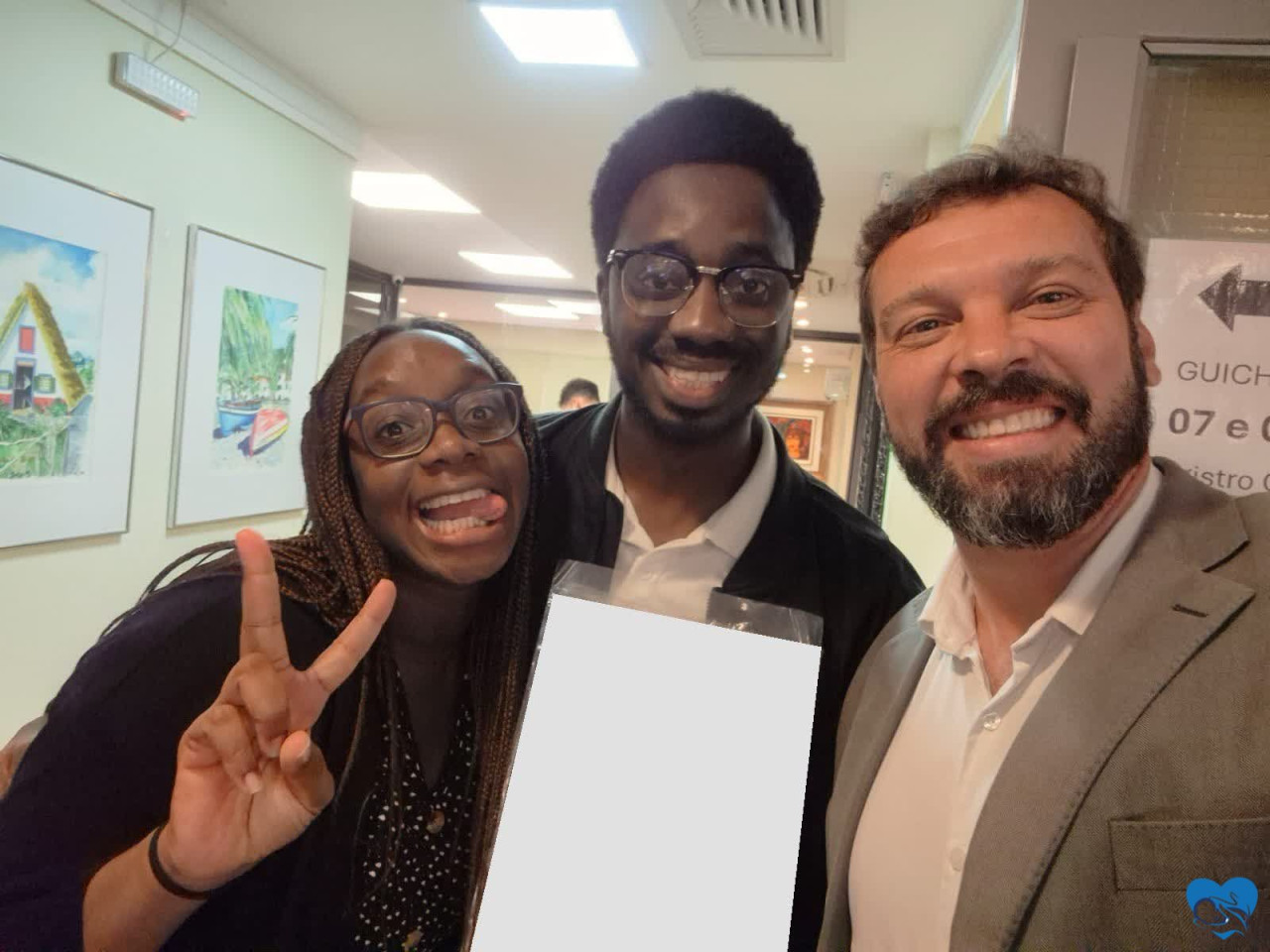
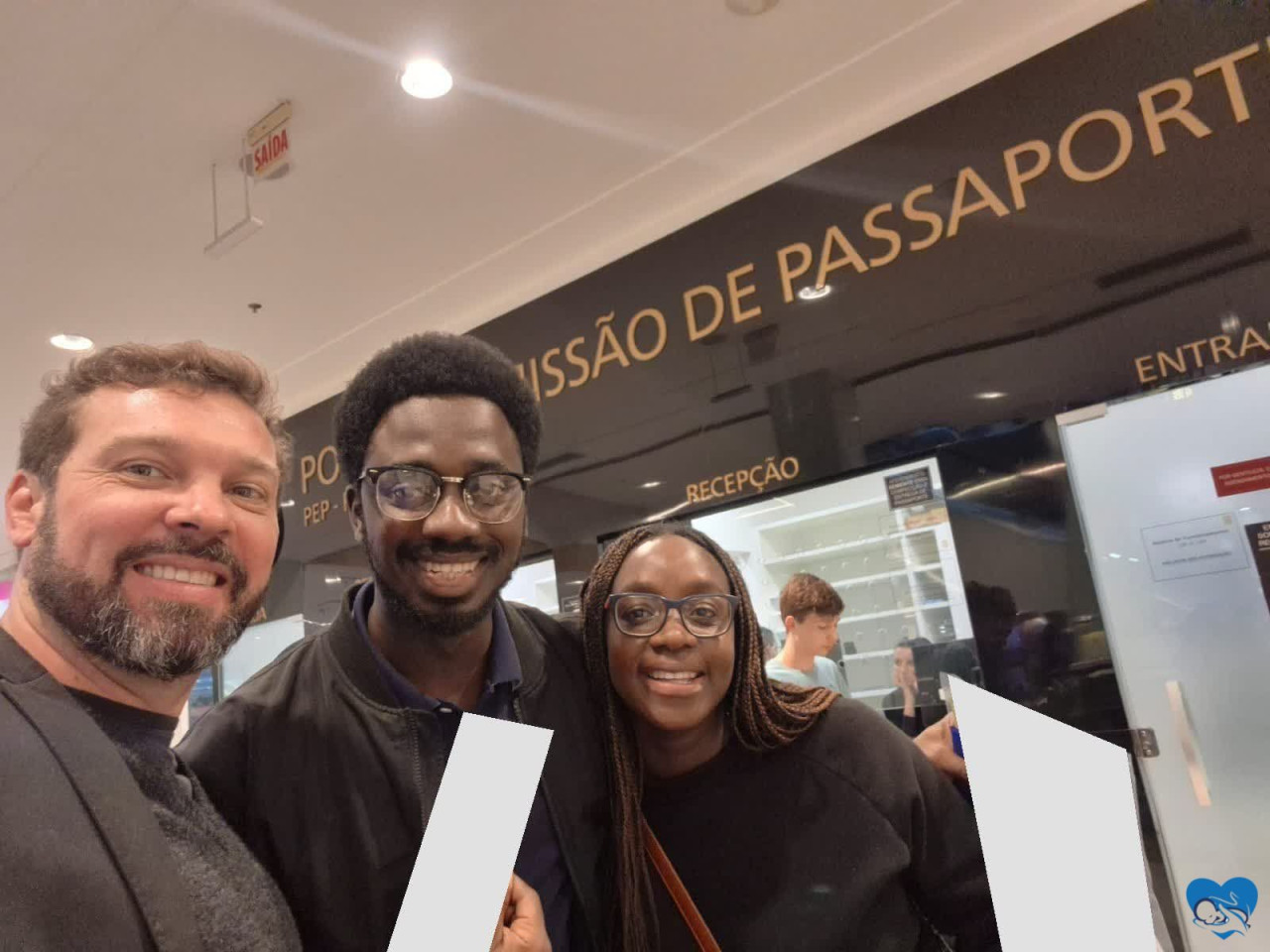
Next came Nathan's passport appointment. Sam describes attending, providing the required information and documents, and arranging the passport photograph. He had expected the process to take weeks. His recollection was different:
"But we had his passport in days."
One of the clearest examples of practical help comes from this period. Sam and Ama had their hands full with a newborn and found it difficult to make extra trips. Eduardo asked them to send scans of documents, printed them and brought the papers to the appointment. The parents still attended; the preparation reduced some of the running around beforehand.
Understanding citizenship and a separate residence application
The general legal context is separate from Sam's personal recollections. Brazil's constitutional nationality rule includes children born in Brazil to foreign parents, subject to the exception concerning parents serving their own country. The Federal Police explains the rule in its official guidance on who is considered Brazilian.
A child's nationality and a parent's immigration status are separate matters. The Federal Police's guidance on family reunification residence includes parents of Brazilian children among the family relationships covered. An eligible parent must follow the applicable application process; having a Brazilian child does not by itself complete a residence application or make the parent a Brazilian citizen.
Sam discusses the parents' residence option as one reason Brazil interested them. The completed steps he describes are their stay extension and the baby's documents. Ask for advice on the route that applies to your own family before making immigration plans.
What Sam would change about the trip
Asked about the hardest part of the whole experience, Sam names the journey to Brazil. Their itinerary involved three flights of roughly five, three and six hours, plus the time spent between connections.
If he planned it again, he would look for fewer layovers and a more comfortable route for Ama and himself. That is his most specific recommendation about doing things differently.
They did not explore as much of Brazil as they might have liked because their attention was on Nathan. Even so, Sam remembers the views, beaches, waterways and walks around Florianópolis. He and Ama discussed returning to see more.
Life at home with Nathan
Ama is feeding Nathan while Sam talks. Their son is growing quickly and has already outgrown much of his clothing.
At home, relatives and friends have been visiting and helping. Sam appreciates having experienced people around while he and Ama learn the routines of caring for their baby. Their family of two has become three, and everyday life has changed with it.
He ends by thanking the Baby in Brazil team for its support and for helping make Nathan's birth memorable.
Questions to take into your own plan
Sam and Ama's story can help you decide what to ask. Your plan should then be built around your own family, proposed care and travel circumstances.
| What mattered in this story | What to ask for your family |
|---|---|
| Speaking to Dr. Diego before travel | Who will discuss your medical history and care options with you? |
| Preparing documents in advance | Which documents and formalities apply before departure and after arrival? |
| Calling Andrea for translation help | Where is language support included and how do you request it? |
| Extending the stay | Who will advise you if your planned dates or permitted stay need attention? |
| Caring for a newborn while organising documents | Which tasks can be prepared remotely and which appointments require attendance? |
| A tiring flight itinerary | What route and travel timing can you discuss with your clinician and airline? |
For your own estimate, request a written breakdown of coordination fees, medical and hospital charges, accommodation, flights, local transport, document-related expenses and provision for a longer stay. Ask which items are included, paid separately or subject to change. A price taken from another family's experience will not explain all of those choices.
Frequently asked questions
-
Why did they choose to give birth in Brazil?
Sam says attentive care for Ama and their baby was his main concern. The family also considered the baby's documents and a potential residence option for parents. They researched Brazil alongside other destinations, including Canada, before making their decision.
-
How did Sam find Baby in Brazil?
He saw an Instagram video featuring Dr. Diego and arranged a call. He and Ama then checked the website, the doctor's background, previous client stories and programme options, and spoke with members of the team.
-
Which hospital did the family choose?
Sam names Baía Sul Hospital in Florianópolis. He says it was one of the options recommended to them and that the family chose it for the facilities and support they wanted. Hospital selection for another family requires its own discussion.
-
Where does Dr. Diego see patients in Florianópolis?
His Baby in Brazil profile identifies his private practice at Plenitá Women's Health Clinic. The clinic's own site names him as technical director. Confirm the consultation location and availability for your own plan.
-
Was Nathan born by vaginal birth or caesarean section?
He says they discussed both vaginal birth and caesarean delivery with Dr. Diego.
-
How did Sam and Ama manage without speaking Portuguese?
They did not speak Portuguese. Sam describes translation help from Andrea and using Google Translate in everyday situations. When planning your trip, confirm the language arrangements for your medical appointments, document appointments and other needs.
-
Was airport pickup arranged?
Yes. According to Sam, a driver sent by Baby in Brazil met them at the airport and took them to their apartment. Check the arrival arrangements and their inclusion in your own proposal when your travel plans are known.
-
What did Eduardo help them with?
Sam describes preparation advice, assistance with extending their stay, support with Nathan's birth certificate, translation arrangements, and help printing and bringing documents to an appointment.
-
What support did the family receive after Nathan was born?
Sam recalls calls and visits from Andrea, attentive hospital staff, and Eduardo's help with Nathan's birth certificate and document arrangements. Back home, relatives and friends also helped. For your own plan, ask what support is available after discharge, how to request it and how long it continues.
-
Did the family successfully extend their stay?
Sam says that they did, with Eduardo accompanying them to Polícia Federal and helping with documents and communication. The account concerns their individual extension. It does not establish eligibility or an outcome for another applicant.
-
Did Nathan receive a Brazilian passport?
Yes. He describes the passport appointment, says the passport was ready within days and confirms Nathan's Brazilian status.
-
Will another baby's passport take the same time?
That cannot be established from one family's experience. Confirm the current requirements and allow for the relevant appointments and processing before fixing travel plans.
-
Does a Brazilian child automatically give the parents residence?
A Brazilian child can provide a family relationship relevant to a parent's residence application, but the parent must complete the applicable process. It is separate from the baby's nationality and passport.
-
How much did this family's trip cost?
Ask for a current written proposal for your family, including what is covered by coordination and what is paid separately for care, accommodation, travel and documents.
-
What would Sam do differently?
He would choose a route with fewer layovers. He describes travelling to Brazil as the hardest part and would aim for a more comfortable journey for Ama and himself.
-
How can I check who is behind Baby in Brazil?
Review the team and professional profiles linked in this article, watch the original interview and use the company's published contact details. Ask to understand who will be responsible for each part of the service and request the proposed scope in writing.
-
Where can I hear the original account?
The full interview is available through the Baby in Brazil YouTube link near the beginning of this article, with chapter links for the main topics.
-
What should I include in my first enquiry?
Tell the team your country of citizenship and current residence, your expected due month, who would travel with you and your preferred language. Explain the help you are looking for and the questions you need answered. Medical details can then be discussed with the appropriate professional.
Start with your family and your questions
Asked what he would tell someone contacting Baby in Brazil for the first time, Sam says:
"Be open, be sincere."
More family experiences
Read Eddie and Irem's birth story, explore Emmanuel and Thato's experience in Florianópolis, or continue to Stories and Interviews.