Giving Birth in Brazil: Eddie and Irem’s Story
Eddie and Irem share their experience in Florianópolis: choosing a doctor, preparing for a vaginal birth, navigating Portuguese and settling into life with their first baby.
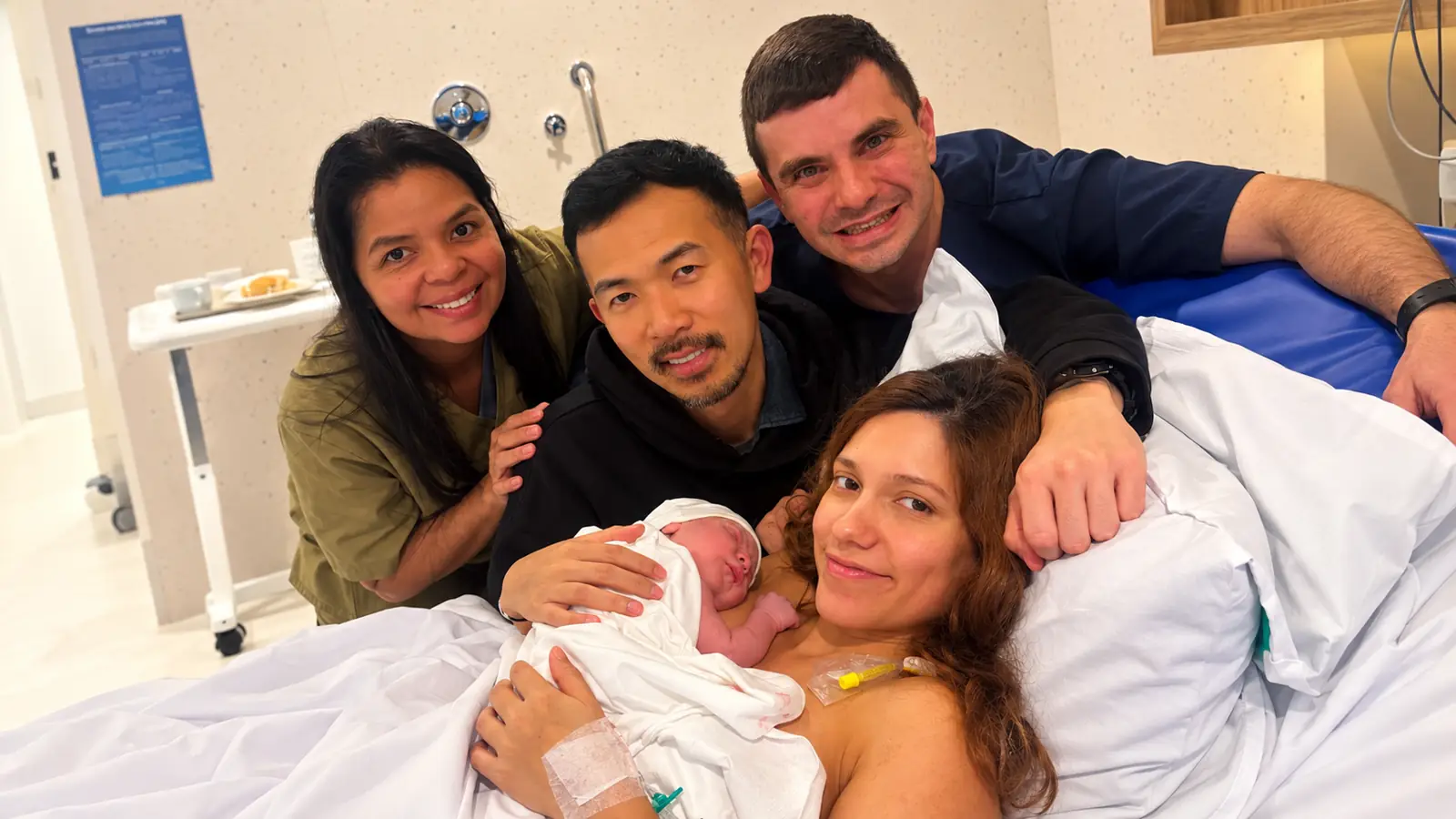
When Irem remembers giving birth in Brazil, she returns to a simple moment: a member of the care team holding her hand. Her mother was far away, and she was having her first baby in a country she had never visited. She remembers feeling supported.
Before travelling, she and Eddie had researched countries, questioned the doctor and examined their agreement with Baby in Brazil, the Florianópolis team coordinating their maternity care and practical support. They wanted clear answers about care, communication and the paperwork that would follow the birth.
They were already an international family. Eddie is Canadian with Chinese roots; Irem is Turkish. Their lives connected Switzerland and Portugal, they had married in Denmark, and they travelled with their dog, Pancho. They knew how to organise a journey. What they needed to understand was how care would work around their first child.
Baby in Brazil produced this interview with Eddie and Irem, who used our service. They describe their own experience of preparing for birth and becoming parents in Florianópolis.
Watch Eddie and Irem tell their story
Watch Eddie and Irem’s full interview on YouTube. The original English interview runs for 45 minutes and 53 seconds and was published on the Baby in Brazil English channel on 10 October 2026.
A Russian version of the interview is also available on the Baby in Brazil Russian channel, with English audio and Russian subtitles.
What you can learn from this family
- They spoke with the doctor before committing and discussed the vaginal birth they hoped for.
- Appointment and language support reduced the practical work of navigating care in Portuguese.
- Preparation gave Eddie concrete ways to support Irem during labour.
- Help continued with newborn-care teaching, professional referrals and documents after birth.
- They valued healthcare coordination most; arrival assistance made the first days easier.
If you are planning a birth in Brazil, their experience can help you decide which questions to ask about your own care, support and travel plans.
The family and their experience at a glance
| Topic | Their experience |
|---|---|
| Family | Canadian Eddie and Turkish Irem, first-time parents |
| Destination | Florianópolis, Santa Catarina, Brazil |
| Care they describe | Private maternity care with Dr. Diego and a wider support team |
| Birth preference and reported outcome | Vaginal birth, discussed in advance and achieved in their case |
| Practical support | Appointment coordination, language help, arrival assistance and document preparation |
| After birth | Newborn-care teaching and referrals for further care |
| Document status at interview | Baby's passport obtained; identity card still pending |
In this story
How Brazil became part of their plans
Portugal was an obvious place to consider because Irem had been living there and had already received prenatal care there. The couple also knew someone who had given birth in Argentina. That experience prompted them to look more widely at what having a baby abroad might involve.
Their research brought Brazil into the conversation. They considered the healthcare options and the possibility of their child having Brazilian nationality and a Brazilian passport. Both mattered to them. They wanted a place where they could feel comfortable with the care while understanding the legal position.
They watched videos of other couples who had given birth in Brazil. Some families had used support services; others had arranged their journey independently. Seeing different experiences helped them work out where professional assistance might be useful for their own family.
They were comfortable arranging flights and accommodation themselves. The question was how much local coordination they could take on while preparing for a first baby. In the interview, they explain that individual tasks were manageable; organising every appointment, professional and administrative step would have added up.
Healthcare coordination became the strongest reason for choosing support. They wanted access to the right people, help arranging care and a clearer understanding of what would happen next.
Why they chose Florianópolis rather than São Paulo
São Paulo was initially on their list because of its hospitals and medical services. As they continued researching, Florianópolis appealed to them as a place where everyday life with a newborn might feel more manageable.
In the interview, they describe Florianópolis as more relaxed for the life they were planning. It was their first visit to South America, and they pictured a temporary home where they could go out for coffee, walk Pancho and get to appointments. After arrival, those routines helped them settle in.
The conversation with Dr Diego before they committed
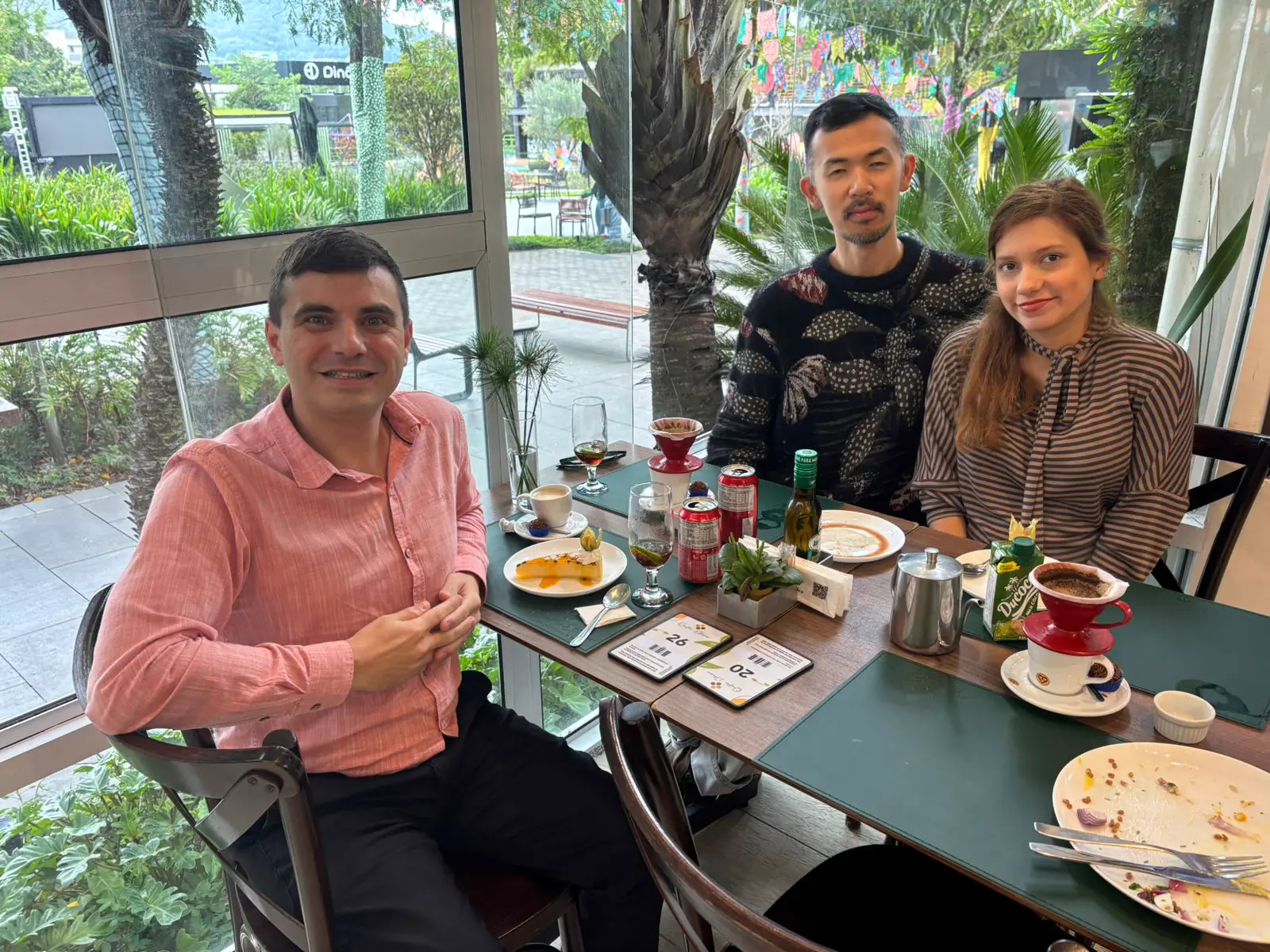
They spoke with Dr. Diego Di Marco before paying or making a commitment. Irem had researched him and wanted to question the person who would be involved in her care.
The couple hoped for a vaginal birth and had concerns about caesarean delivery. They wanted to understand how their preferences and medical decisions would be discussed.
Eddie describes his background as being in public health. He recalls sharing published research with Dr. Diego, including papers he found through PubMed, and valued the doctor's willingness to discuss it.
They also examined the agreement and asked questions about its terms before proceeding.
Hospital Baía Sul’s specialist directory lists Dr. Diego Di Marco Ataides under Gynaecology and Obstetrics, with CRM/SC 19291 and RQE 10968. Meet the professionals involved in our work on the Baby in Brazil team page.
For your own discussion with a doctor, use the questions for your first consultation.
Arriving in Florianópolis and making daily life work
The couple booked their own flights and chose their accommodation. Eddie says he selected an Airbnb himself. Their story shows that professional support can sit alongside decisions a family makes independently.
Arrival still involved a lot of practical detail. They were travelling with luggage, Pancho and equipment for the baby. Eddie remembers being asked about the luggage dimensions so that the airport pickup could be planned around what they were bringing.
They describe being collected at the airport, having initial groceries arranged and receiving help with temporary mobile connectivity. These details made it easier to settle in while they found their bearings.
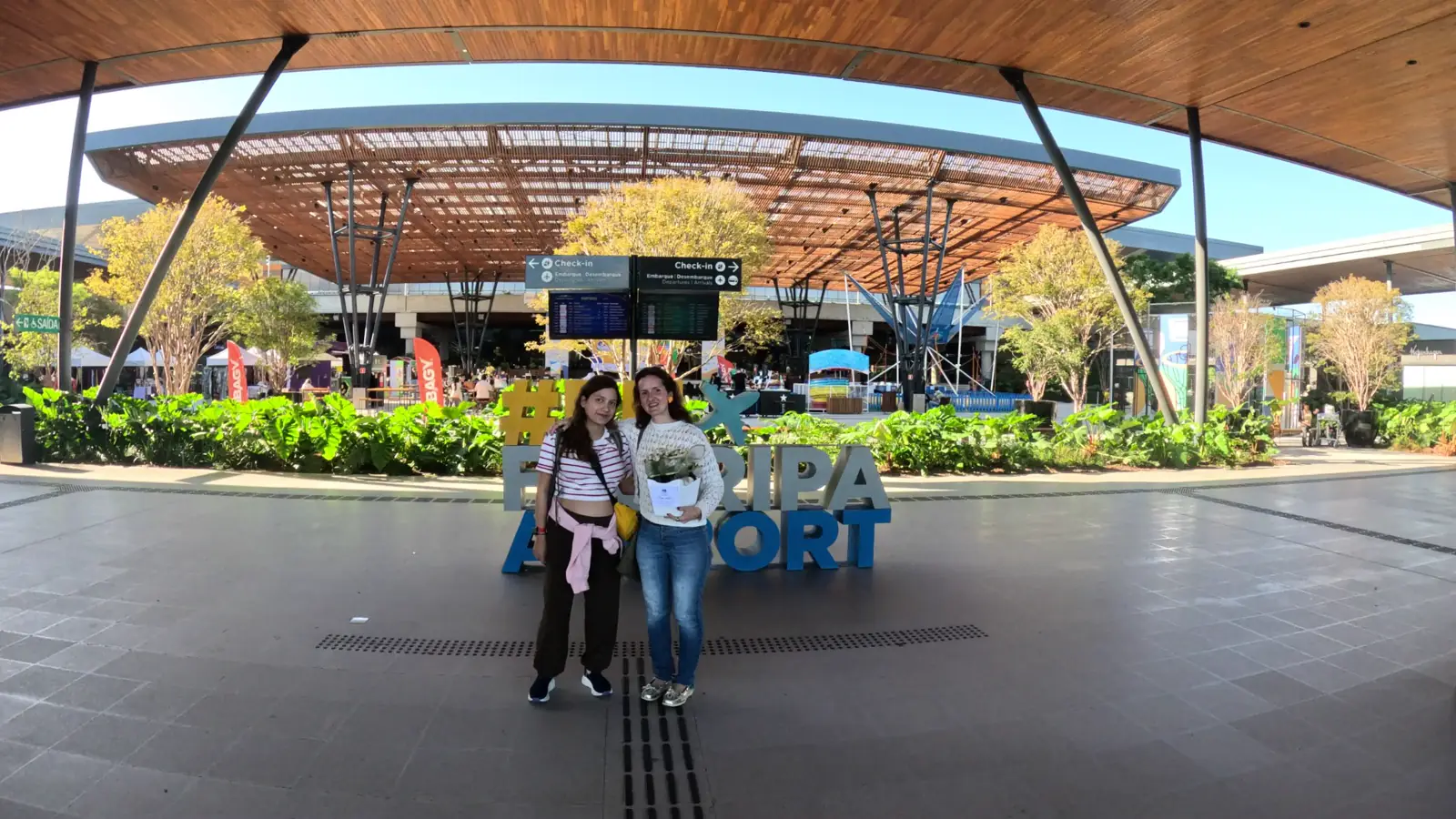
They also appreciated everyday administrative help. Eddie mentions the usefulness of having a CPF when arranging ordinary purchases. A CPF is an administrative taxpayer identifier; its practical uses should not be confused with citizenship or residence status.
If you are arranging accommodation in Brazil, start with how you expect to live during the stay. Ask about the route to appointments, access to groceries, laundry, stairs or lifts, space for baby equipment and any needs of accompanying relatives or pets. Confirm arrangements with the property provider and care team before booking.
Their hindsight was that more time to get to know the city would have been welcome. They wanted to explore, but their attention soon centred on the baby. The right travel date for another family should be discussed with the treating clinician and airline, alongside entry requirements and the intended length of stay.
Giving birth in Brazil without fluent Portuguese
Language was a real difficulty for the couple. Their levels of Portuguese differed, and they still needed help handling some appointments, questions and administrative tasks.
They used translation apps in everyday life. They describe people being willing to communicate with them, even when they did not share a language. Baby in Brazil also helped with conversations and arrangements that would have been harder to manage alone.
Some professionals spoke English well; other interactions involved translation. During birth, a meaningful moment of support came from someone who did not share their language.
For your own plan, ask who can communicate with you during consultations, admission, labour and follow-up, and where interpretation will be arranged.
Preparing for birth and continuing prenatal care
Irem had already begun prenatal care in Portugal. The couple describe the transition to Brazil as smooth. Once in Florianópolis, the team arranged appointments and helped with communication. They knew where they needed to go, without having to organise every call themselves in Portuguese.
Irem also talks about the preparation she received for birth, including physiotherapy. She says that learning and discussing what to expect helped her feel more comfortable. She remembers sharing things she had learned with relatives, and feeling reassured that professionals were helping her prepare.
Eddie learned ways to support Irem during pelvic physiotherapy and related discussions, including movements, positions and massage. They used only some of what they had learned, but he says the preparation helped him understand what was happening and how he could participate.
For your own care, bring existing records and questions to the receiving clinician. Confirm how appointments will continue after arrival and which preparation is appropriate for the pregnancy.
Planning a vaginal birth while understanding that plans can change
Irem hoped for a vaginal birth. She and Eddie discussed that preference with Dr. Diego, and she describes having the birth they had planned for.
“It was a natural birth as we planned.”
The couple use “natural birth” to mean vaginal birth. The interview does not specify every intervention or pain-relief choice. What they emphasise is being able to discuss their preference and understand when the plan might need to change.
When comparing maternity hospitals and birth options, ask about the people involved in your care, how preferences are recorded and how information will be explained during labour. Discuss pain relief, the role of a companion or doula, and the arrangements for situations that require a change of plan with your treating team.
The day their baby was born
Irem gave birth at Baía Sul Mulher in Florianópolis. When Irem describes the birth, one memory stands out. A member of the care team held her hand. Her mother was far away, and the support at that moment made her feel accompanied.
She is not certain in the interview whether it was a nurse or the doula. The feeling is clear: someone was there with her, responding to her as a person during an unfamiliar and emotional experience.
“we didn't feel alone.”
The couple describe the hospital experience as professional and reassuring. Their memories include having lunch before going to the hospital and Dr. Diego helping them check in. They recall a sense of familiarity with the people around them, which helped the day feel calmer.
They also speak warmly about the doula's support. Eddie felt better able to take part because of the preparation they had done. When they describe the first moments after birth, happiness comes alongside exhaustion and relief.
If you are considering doula support, ask about the person's role, language, availability and arrangements with the clinical team.
The support they valued after returning home
The birth was followed by a new set of questions. They were learning how to care for a baby, adapting to less sleep and arranging follow-up care in a country that was still new to them.
They had prepared with books and videos. An in-person newborn-care lesson at their accommodation gave them a chance to ask questions and practise. They remember learning about changing a nappy on the sofa where they later sat for the interview.
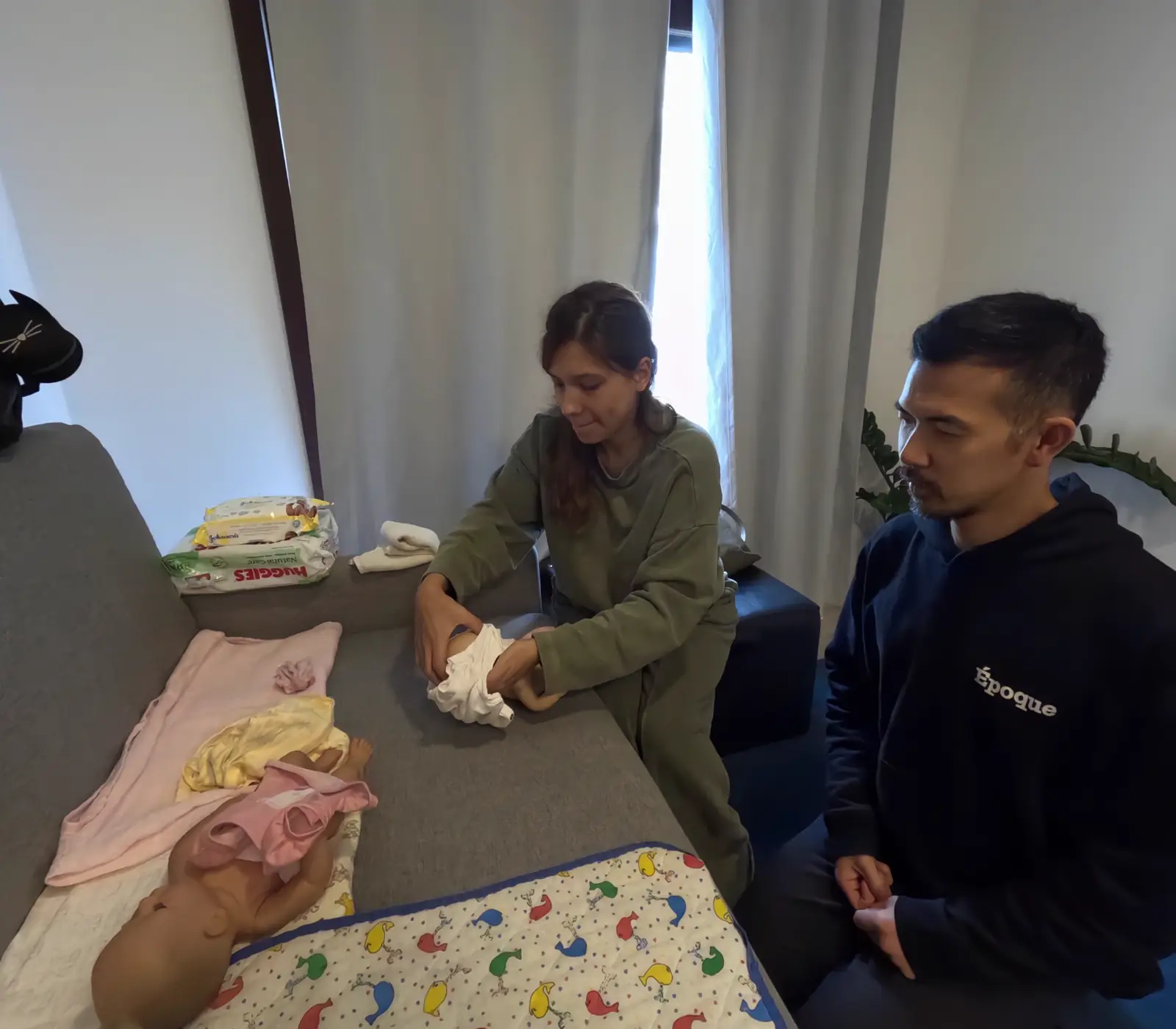
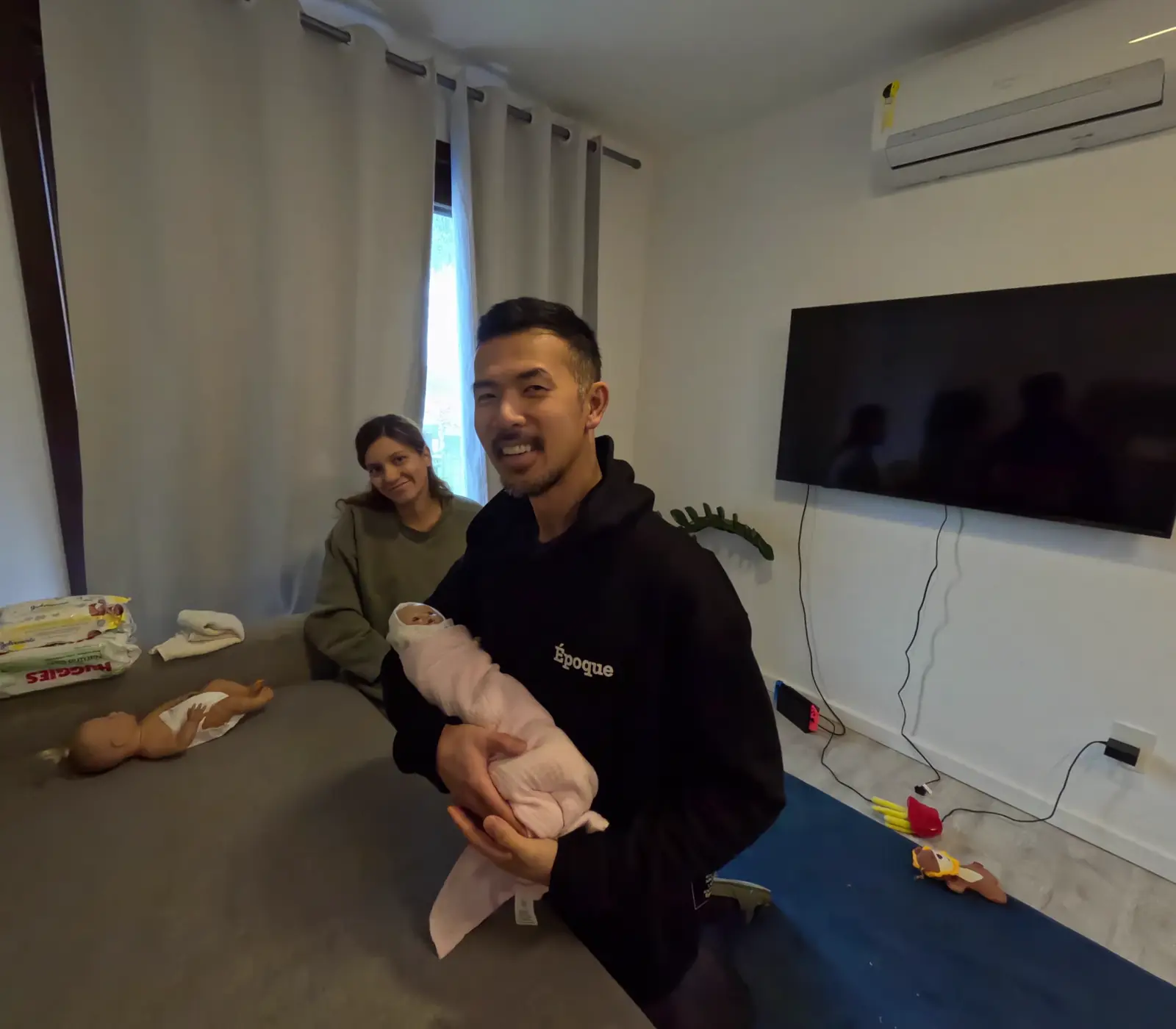
Neither had much experience holding a newborn. Being shown basic care helped them feel more confident as they gradually became comfortable with their baby.
They also appreciated referrals to an English-speaking paediatrician and a paediatric dentist. Being able to communicate directly helped them feel comfortable asking questions and continuing care after birth.
If you are evaluating postpartum care and recovery support, ask what happens after discharge. Clarify the follow-up arrangements for mother and baby, how appointments are booked, how questions are directed to the appropriate professional and what is included in the agreed service.
The passport and paperwork after birth
Before the baby arrived, Eddie and Irem were concerned about managing documents with a newborn. After birth, they describe the process as easier to navigate than they had expected.
The preparation mattered. Appointments were arranged, they knew what documents and photographs to bring, and they could reach the lawyer or team when they needed help. They particularly valued avoiding unnecessary repeat trips.
“We didn't waste any trips, right?”
At the interview, their baby's passport had been obtained and the identity card was still pending. One document was ready while another application continued.
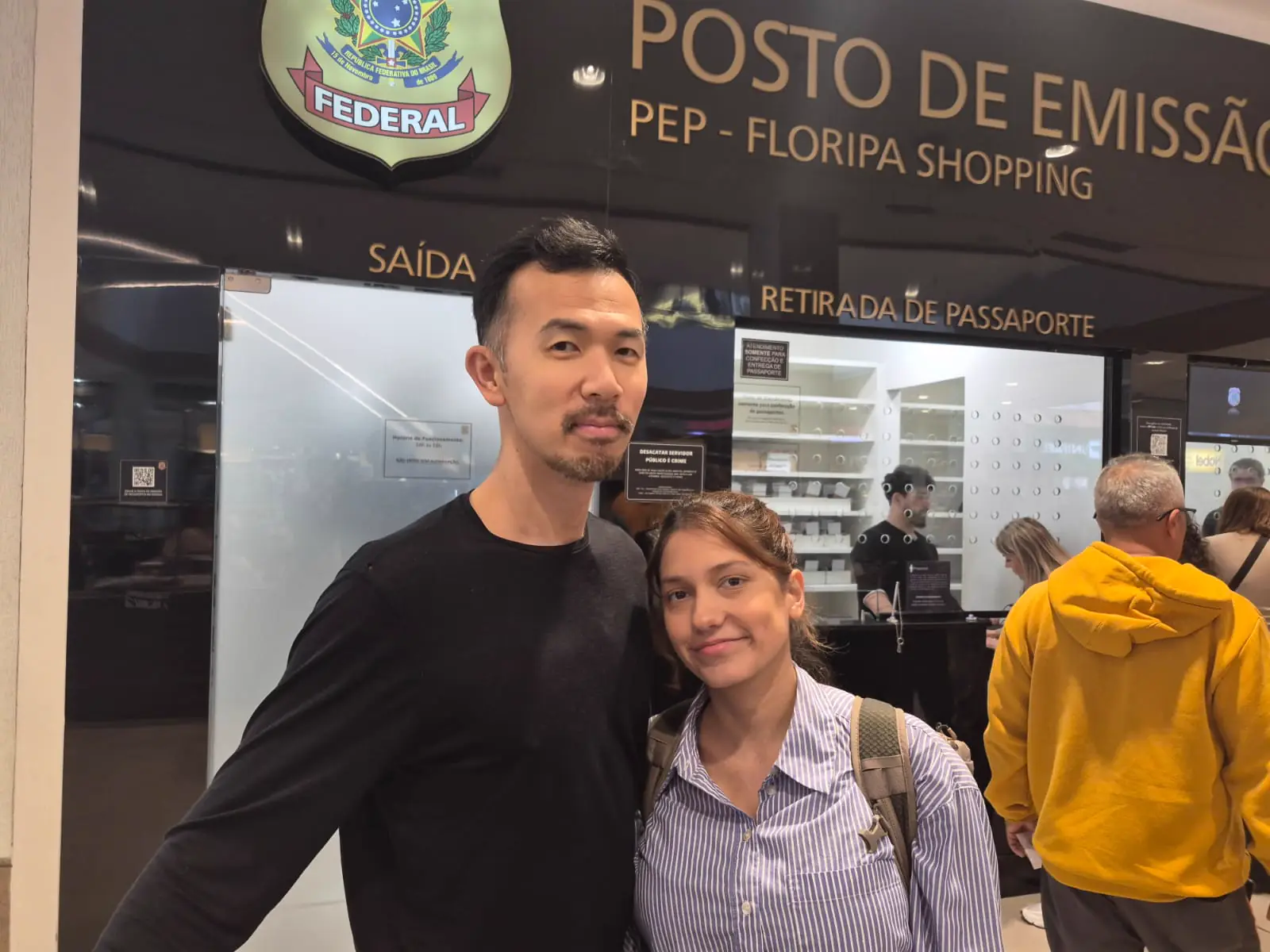
Birth registration, the baby’s passport and an identity-card application are separate parts of the document process. Ask the legal team how the steps fit together for your family.
A passport is a separate application handled by the Federal Police. Its requirements include a valid CPF, identification and the appropriate authorisation for a minor. The Federal Police accepts a birth certificate as identification for a child under 12, subject to its requirements. A separate identity card is therefore not a universal prerequisite for a newborn's passport. See the official passport document requirements.
Practical details from the Federal Police requirements
For children under five, the Federal Police requires a recent 5 × 7 cm photograph on a white background, and the child must still attend the appointment. A newborn’s photograph may show closed eyes.
Consent to issue a passport is separate from permission for international travel. Travel permission may be printed in the passport or provided separately when required. If you want permission to travel with either parent alone printed in the passport, choose this before the appointment: changing that printed permission later requires a new passport.
Checked on 12 November 2026.
For your own plans, allow time for the required documents and appointments before fixing a departure date.
Citizenship for the child and residence for the parents
The possibility of a Brazilian passport for their child was one factor in Eddie and Irem’s decision.
Article 12 of Brazil's Constitution generally recognises a child born in Brazil as Brazilian by birth, including a child of foreign parents, subject to the exception for parents serving their own country. Birth registration and a passport application are the processes used to document identity and obtain a travel document; they should not be confused with the underlying nationality rule. Brazilian Constitution Article 12.
A child’s Brazilian nationality does not automatically grant the parents Brazilian citizenship. Residence arrangements involve a separate process. Discuss the relevant requirements and documents with the legal team.
Eddie and Irem describe obtaining their baby’s passport in the interview. They do not describe completed residence or citizenship approvals for themselves.
What Baby in Brazil helped this family coordinate
Much of the support was practical. An appointment was already arranged; a question could go directly to the lawyer; someone had explained what to bring. The couple describe how those individual actions reduced the work they had to manage.
| What the family needed | Support described in the interview |
|---|---|
| Confidence about the care approach | A conversation with Dr. Diego before committing |
| Continuity after earlier prenatal care | Local appointments and care coordination |
| Help communicating | Team assistance alongside translation apps |
| Preparation for birth | Physiotherapy and practical preparation |
| Support away from relatives | Care-team and doula support during birth |
| Help with early parenthood | Newborn-care teaching and professional referrals |
| A manageable arrival | Airport pickup, initial groceries and temporary connectivity |
| Organised paperwork | Appointment and document preparation with legal support |
The shared WhatsApp group was an important part of how the arrangements worked. The couple could contact the lawyer and other team members directly. They did not describe needing assistance every week; they valued having a clear place to ask when a question or appointment required coordination.
“But the value add was really on the healthcare side of things.”
Transport and groceries were useful. Access to the healthcare professionals and help organising the care were what they valued most.
The people behind Baby in Brazil
Baby in Brazil supports international families in Florianópolis, Santa Catarina. Our work brings together maternity-care coordination, legal guidance and practical help before arrival, around the birth and during the first weeks with a baby.
Our team profiles introduce the people behind that work. The roles are different, and knowing who handles each part makes planning easier.
- Medical care. Dr. Diego Di Marco is an obstetrician and Baby in Brazil's medical co-founder. He works with families on pregnancy care and birth planning. Clinical decisions are discussed with the treating professionals, taking account of the pregnancy and the mother's preferences.
- Legal planning. Eduardo, our legal partner, helps families understand document preparation, the baby's Brazilian documents and the residence applications that may be relevant to the parents. Eligibility, applications and approvals are distinct steps.
- Coordination and language support. The coordination team helps connect appointments, communication, transfers, accommodation assistance and follow-up arrangements within the agreed plan. English and Portuguese support is available; Russian-speaking families can ask for Anastasia, our Russian-speaking coordinator. Confirm the language arrangements for the professionals and appointments in your own plan.
Your proposal should state which professionals and services are included, how provider charges are handled and who is responsible for each next step.
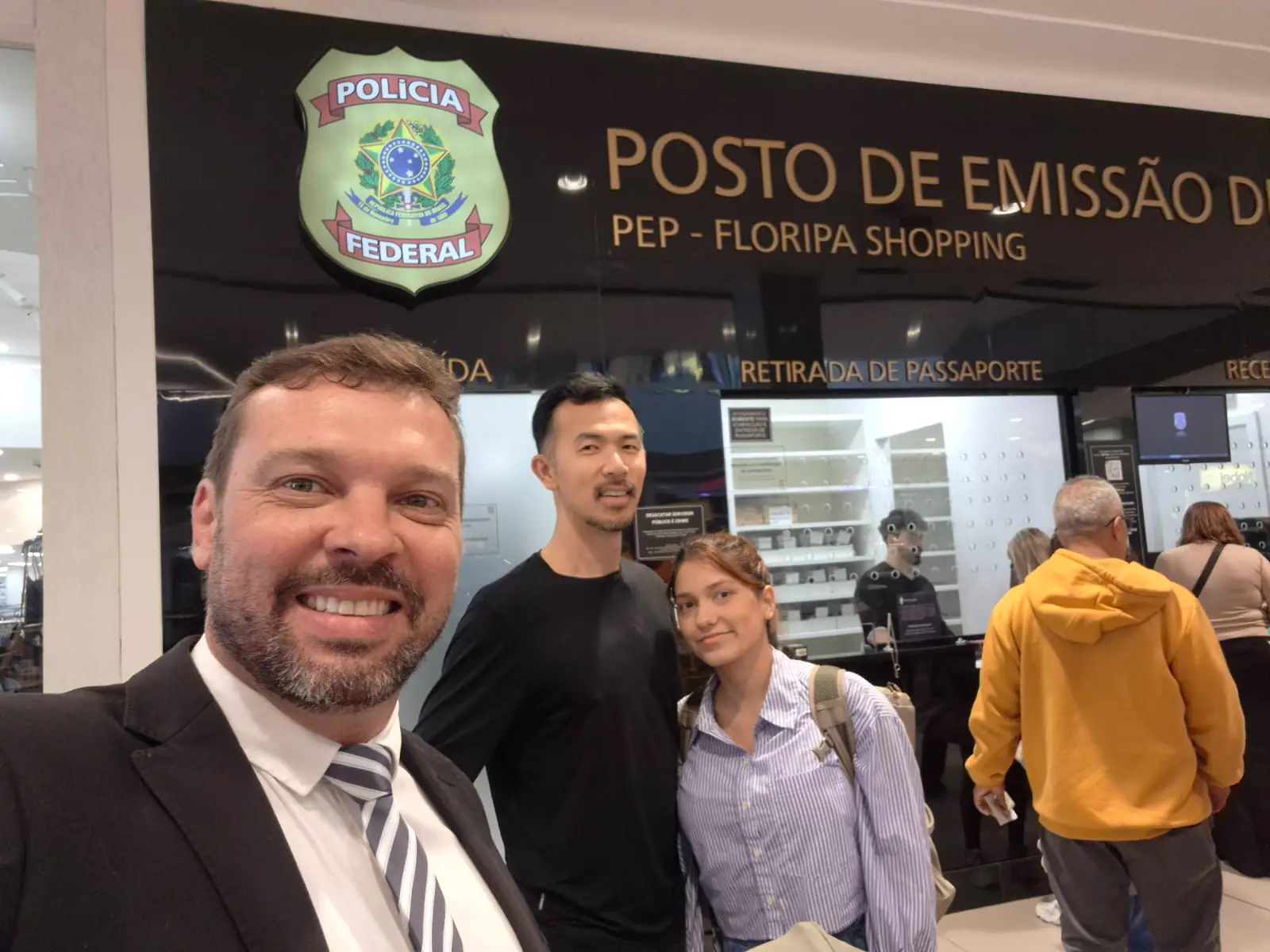
Our company contact page lists CNPJ 60.758.458/0001-36, our Brazilian company identifier, together with business contact details in Florianópolis.
Planning the cost of giving birth in Brazil
Eddie and Irem arranged their own flights and accommodation. When planning your stay, separate those travel and living costs from maternity care and the support you request locally.
Ask for a written proposal covering prenatal consultations and tests, medical and hospital fees, coordination and language support, postpartum care and document assistance. Check which provider charges are included, which are paid separately and what may change if the care plan or length of stay changes.
Allow for travel, accommodation and everyday expenses in the whole-stay budget. Ask for current prices, the currency and payment stages.
Their journey from research to early parenthood
Their interview follows seven stages:
- Research. They considered alternatives and watched other families' experiences of giving birth in Brazil.
- Before committing. They spoke with Dr. Diego, discussed birth preferences and examined the agreement.
- Arrival. They travelled to Florianópolis and received help with airport pickup, initial groceries and temporary connectivity.
- Prenatal care. Appointments and birth preparation continued after their earlier care in Portugal.
- Birth. Irem had a vaginal birth with the care-team support she describes.
- Early parenthood. They learned newborn-care skills and received referrals for further care.
- Documents. The baby's passport was obtained; an identity card remained pending at the interview.
What they would tell another family
Their advice combines a recommendation with practical hindsight. They would have liked to learn more Portuguese and have more time to explore Florianópolis before their baby arrived.
They also stress the parents' part: a team can coordinate and guide, but parents still prepare, make decisions and care for their child.
At first, they questioned the company, the doctor and the contract. They became more comfortable with the referrals and arrangements after experiencing the support themselves.
“We felt like we were in good hands.”
Questions to take into your first conversation
Before choosing a plan, consider writing down the questions that matter most to you.
- Who will assess the pregnancy and provide maternity care?
- How will earlier records and current clinical needs be reviewed?
- How can we discuss birth preferences and a possible change of plan?
- Who will communicate with us at each stage, and in which language?
- Which hospital arrangements will be confirmed for our case?
- What happens after discharge for the mother and the baby?
- Which services and third-party charges are included in the proposal?
- Which documents should we prepare before travelling?
- Which legal applications are relevant to our family?
- Who should we contact when medical, legal or practical questions arise?
The purpose is to leave the conversation knowing what is agreed, what needs further assessment and who will take the next step.
Frequently asked questions
About the family and Baby in Brazil
-
Who are Eddie and Irem?
They are an international couple who shared their first-birth experience with Baby in Brazil. Eddie is Canadian and Irem is Turkish. At the time described, their lives connected Switzerland and Portugal, and they chose Florianópolis for the birth of their first child.
-
How can I check this client story and the Baby in Brazil team?
Watch the linked interview to hear Eddie and Irem describe their experience directly. You can also meet our team and consult our company contact details.
-
Where is Baby in Brazil based?
The team is based in Florianópolis, Santa Catarina, Brazil. The contact details and team profiles linked in this article identify the people involved in medical, legal and practical support.
-
Why did they consider giving birth in Brazil?
They were interested in the healthcare options and the possibility of their child having Brazilian nationality and a passport. They also wanted a care team they could question directly and a practical plan for the stay.
-
Why did they choose Florianópolis?
They wanted a place where daily life with a newborn and a dog would feel manageable. Florianópolis appealed to them for its calmer atmosphere and the routines they expected to have during the stay.
-
Did they compare Brazil with other destinations?
Yes. They initially considered Portugal, explored the idea of Argentina and looked at São Paulo before choosing Florianópolis. Their decision combined healthcare, practical arrangements and their family's circumstances.
-
Can I watch the original English interview?
Yes. The English interview is available on YouTube and runs for 45 minutes and 53 seconds. A separate Russian publication is also linked near the beginning of this article.
Choosing care and preparing for birth
-
Did they speak to the doctor before committing?
Yes. They say they spoke with Dr. Diego before paying or making a commitment. That conversation helped them ask about care, explain their preferences and assess whether they felt comfortable proceeding.
-
What questions did they ask the doctor?
They discussed vaginal birth, caesarean delivery and how clinical decisions would be explained. Eddie also shared published medical research and valued being able to discuss it with Dr. Diego.
-
Did Irem have a natural birth?
Yes. She describes a vaginal birth, which she calls a natural birth in the interview. She and Eddie discussed that preference with Dr. Diego before committing.
-
How can we discuss birth preferences and a change of plan?
They raised their preference for vaginal birth with Dr. Diego before committing. For your own pregnancy, ask how preferences are recorded, how options are explained and how you will participate in decisions if the plan changes.
-
Where did Irem give birth, and what should parents confirm for their own stay?
Irem gave birth at Baía Sul Mulher in Florianópolis. Ask the team to confirm the proposed facility, the professionals involved, the language arrangements, available care and how hospital charges are handled. Clarify who to contact when labour begins or an urgent question arises outside appointment hours. Eddie and Irem describe private maternity care; the right arrangements for you depend on your own assessment and plan.
-
How did their earlier prenatal care connect with care in Brazil?
They had received prenatal care in Portugal and describe the transfer as smooth. For your own pregnancy, ask the receiving clinician what records are needed and how appointments and investigations will be planned after arrival.
-
What did they find useful about birth preparation?
Irem says preparation and physiotherapy helped her feel more comfortable. Eddie learned practical ways to support her, which gave him a clearer role during labour.
-
Was Eddie able to participate during birth?
He describes wanting to be involved and finding the preparation helpful. Learning possible ways to support Irem gave him a clearer role. Discuss companion arrangements and any facility requirements with your own maternity team.
-
Was a doula part of their experience?
Yes. They describe the doula as an important source of support. Ask how doula support can be arranged for your own plan, including the person's role, language, availability and charges.
-
What support mattered to Irem during labour?
Irem remembers a member of the care team holding her hand while her mother was far away. She was unsure whether the person was a nurse or doula, but clearly remembered feeling supported.
Language and everyday arrangements
-
Did they speak fluent Portuguese?
Their levels of Portuguese differed, and they still faced a language barrier. They used translation apps and received help with communication and coordination. Looking back, they would have liked to learn more Portuguese.
-
Did every professional they met speak English?
No. Their account includes translated conversations and support from people who did not share their language. They specifically appreciated English-speaking professionals during follow-up care. Confirm language arrangements for each stage of your own care.
-
What help did they receive with appointments?
The team arranged appointments and helped with communication, reducing the calls and coordination they needed to manage in Portuguese. Confirm the appointment and interpretation support included in your proposal.
-
Did Baby in Brazil book their flights and accommodation?
They booked their own flights, and Eddie says he selected their Airbnb. They still found local support valuable. Their experience shows that families can handle some arrangements independently and agree assistance for the parts where it is most useful.
-
What happened when they arrived?
They describe airport pickup, initial groceries and temporary mobile connectivity. Eddie also recalls discussing luggage dimensions before the transfer. These details helped them settle in while they became familiar with their surroundings.
-
Can families travel with a pet?
The couple travelled with Pancho. If you intend to bring a pet, check the current entry, airline and accommodation requirements for your animal and route before booking.
-
When should another family arrive in Brazil?
Agree travel timing with your treating clinician and airline. Coordinate entry requirements, appointments and the intended length of stay with the relevant team members before committing to travel dates.
-
What should we consider when choosing accommodation?
Think about your route to appointments and how you will live with a newborn. Space, laundry, food access, stairs or lifts and the needs of accompanying relatives can matter. Ask for local guidance before committing to a property.
After birth and documents
-
Did support continue after the baby was born?
Yes. They describe newborn-care teaching, further appointments and document coordination. They valued having people to contact while adapting to first-time parenthood. The scope of after-birth support should be stated in each family's agreement.
-
Did practical newborn-care teaching help?
Yes. Practising basic care in person and being able to ask questions helped them feel more confident about holding their baby and changing a nappy.
-
How did they find follow-up professionals?
They received referrals to an English-speaking paediatrician and paediatric dentist. Being able to communicate directly made it easier to ask questions and continue care after birth.
-
Had their baby received a Brazilian passport?
Yes. At the interview, the baby's Brazilian passport had been obtained. A separate identity card was still pending.
-
Does a newborn always need an identity card before applying for a passport?
The Federal Police accepts a birth certificate as identification for children under 12, subject to its requirements. A passport application also has other conditions, including a valid CPF and appropriate authorisation.
-
How long will my baby's documents take?
Ask the legal team for a plan based on the documents required, appointment availability and your circumstances. Keep departure plans flexible until the necessary travel documents and arrangements are confirmed.
-
Is a baby born in Brazil automatically a Brazilian citizen?
The general constitutional rule recognises birth in Brazil, including to foreign parents, with an exception for parents serving their own country. Registration and travel documents still require the relevant procedures.
-
Do parents automatically receive citizenship or residence?
Parents do not automatically receive Brazilian citizenship through the birth. Having a Brazilian child can support a separate residence application through family reunification, subject to applicable requirements. Discuss the relevant pathway and documents with the legal team.
-
Will our visa requirements be the same as theirs?
Visa and entry requirements depend on each traveller’s passport and circumstances. Check current requirements with the relevant Brazilian consulate before travelling, including the permitted stay and any rules relevant to your plans.
Costs and getting started
-
What should a budget for giving birth in Brazil include?
Request a current written proposal that distinguishes service coordination, medical and hospital fees, accommodation, travel, documentation and possible additional expenses. Ask what is paid to each provider, what is excluded and how changes to the care plan or length of stay affect the total.
-
Are hospital costs included in every package?
Check the exact proposal. It should state which medical and hospital charges are included, which are paid separately and how additional care or a change of plan would affect the budget. If you plan to use insurance, confirm maternity coverage, exclusions and payment arrangements with the insurer and providers.
-
Which part of the service did they value most?
Healthcare coordination mattered most to them: access to professionals, appointments and communication around pregnancy, birth and early parenthood. They also appreciated the practical arrival assistance.
-
How did the WhatsApp group help?
The group allowed direct contact with the lawyer and other team members. They could see who was involved and ask the relevant person when a question or appointment required coordination.
-
What should I send when I first contact Baby in Brazil?
Start with your name and your partner's name if applicable, email, preferred WhatsApp number, nationality, country of residence, pregnancy week or due date and expected arrival period. The team can explain the next steps and what information is needed for the medical and legal discussions.
-
What happens after I contact Baby in Brazil on WhatsApp?
Start a conversation with our team. A team member will discuss your circumstances and priorities. We can then organise a private Baby in Brazil Team group with the relevant doctor, legal partner and coordinator, and explain the next information and planning steps.
Plan your own conversation with Baby in Brazil
WhatsApp: +55 48 99217 9887. Email:
Share your name and your partner's name if applicable, email, preferred WhatsApp number, nationality, country of residence, pregnancy week or due date and expected arrival period.
After the initial conversation, we can organise a private Baby in Brazil Team group with the relevant doctor, legal partner and coordinator. The team will explain the next steps, which records are needed and how to share them privately. You can then discuss the proposed scope, appointments, responsibilities and costs before deciding how to proceed.
More family stories and planning information
For another family’s perspective, read Emmanuel and Thato’s Florianópolis story and explore the questions they brought to planning their baby’s birth.
Explore more family experiences and planning topics on the Baby in Brazil blog.