When Emmanuel from Nigeria and Thato from South Africa began planning the birth of their first child, they were not simply choosing a hospital. They were choosing a country, a city, a medical team, a legal pathway, a place to recover, and a support system for the first days of their daughter’s life.
They were living in South Africa when the idea first became serious. Emmanuel wanted a broader future for his child: more languages, more cultural possibilities and a beginning that would not be limited to one country. Thato was pregnant, tired, emotional and physically changing every week. Like many mothers, she needed to feel safe before anything else. Like many fathers, Emmanuel began carrying the practical weight: research, visas, countries, doctors, documents, flights, costs, timing and the question every parent feels but does not always say out loud: “Can we really trust these people with the birth of our baby?”
Their final choice was Florianópolis, Brazil. Their daughter Eliana was born there with BabyInBrazil support. But this story is not only about the day of birth. It is about the full international family journey: from online research to WhatsApp questions, from Argentina versus Brazil to Rio, São Paulo and Florianópolis, from meeting Dr. Diego Di Marco to preparing for a natural birth, from doula support and hospital care to breastfeeding challenges, newborn appointments, baby documents, CPF, passport guidance and the parents’ next legal steps.
This is why Emmanuel and Thato’s case matters. It shows what foreign parents really need when they are planning to give birth in Brazil: not only a clinic, not only a doctor, not only an agency, and not only legal paperwork. They need an integrated family pathway where medical coordination, legal guidance, daily-life support and emotional trust work together.
“The most important thing is the birth. You have to be safe.” — Emmanuel
Why this case is important for international families
Many international parents start with the same search: “giving birth in Brazil as a foreigner”, “baby born in Brazil citizenship”, “birth in Brazil for foreign parents”, “Brazil baby passport”, “parents’ residency after child birth in Brazil”, or “best city in Brazil to give birth”. Behind every search term there is a real family, and usually there are two different kinds of fear.
The mother is often thinking about her body, the baby, the pain, the hospital, the doctor, the language, the room, the birth plan and whether she will feel protected in a country that is not yet familiar. A pregnant woman does not only need information. She needs calm. She needs to feel that if something changes, someone will answer. She needs to know that she will not be treated like a tourist who arrived with a medical question, but like a mother whose safety matters.
The father or partner is often thinking about the operating structure around the birth. Which city is safer? How early should we arrive? What if the airline asks for documents? What if the baby comes early? Which hospital? Which doctor? Which apartment? Which documents are needed before birth? What happens after the birth certificate? How do we get CPF, passport, translations, legalisation, consular steps and possible residency guidance? What if the family does not speak Portuguese? What if something happens at night?
A weak birth-abroad plan answers one question at a time. A strong plan connects everything. Emmanuel and Thato’s story is the proof of that. They did not need only a delivery room. They needed a trusted medical leader, a city that felt manageable, a team that could explain the process, a support line on WhatsApp, a birth plan, a doula, help adapting to Portuguese, document coordination and postpartum guidance after the baby arrived.
Emmanuel and Thato’s experience shows why childbirth abroad is easier to navigate when medical care, legal guidance, daily-life support and postpartum planning are connected.
Case at a glance
- Family: Emmanuel from Nigeria and Thato from South Africa.
- Residence before Brazil: South Africa.
- Baby: Eliana.
- Destination city: Florianópolis, Santa Catarina, Brazil.
- Initial options considered: Argentina and Brazil; then Rio de Janeiro, São Paulo and Florianópolis.
- Main decision factors: safety, trusted doctor, birth support, documents, language, housing, local guidance and the first weeks with a newborn.
- Medical trust point: meeting Dr. Diego Di Marco in Florianópolis helped the family move from research and doubt to confidence and action.
- Birth preference: Thato wanted a natural birth and received preparation and doula support.
- Postpartum lesson: the family discovered that the first days after birth can be harder than expected and should be planned before the baby arrives.
- Document lesson: baby documents and parents’ next legal steps should be prepared early and handled with qualified legal support, without promises or guarantees.
- Main message for future families: giving birth in Brazil can feel understandable and supported when medical, legal and daily-life guidance are connected in one plan.

From an idea to a serious family decision
For Emmanuel, the idea began with the future he wanted for his child. He wanted something different: a life with broader options, exposure to more languages and a beginning that felt international. When Thato became pregnant, the idea moved from theory to responsibility. A baby was coming. The family needed to choose a real place.
Argentina was considered first. Brazil later became the stronger option. Emmanuel had already visited Brazil before, which gave him some familiarity with the country. But visiting a country and choosing it as the place where your partner will give birth are two very different decisions. A visitor can accept uncertainty. A father preparing for childbirth cannot.
Once Brazil became the likely destination, the family still had to choose the right city. Rio de Janeiro, São Paulo and Florianópolis were all considered. Each one can make sense for a different family. São Paulo is Brazil’s largest business and medical hub. Rio is internationally known and has a strong private healthcare network. Florianópolis offers a different kind of value: a calmer rhythm, strong private care, nature, beaches, family life and a sense of daily-life manageability that can matter deeply during pregnancy and postpartum.
For Emmanuel and Thato, the final question was not “Which city is famous?” It was “Where can we feel safe, supported and guided as a family?”
How they found BabyInBrazil
Like many families today, Emmanuel’s research began online. He searched videos, watched content on YouTube and TikTok, and found Dr. Diego Di Marco’s material. From there, he contacted BabyInBrazil on WhatsApp to ask how the process worked.
At that time, Thato was still around four to five months pregnant. They were not trying to arrive tomorrow, but they needed clarity early. Emmanuel asked about birth packages, timing, documents, possible residency pathway for parents, the best city, medical support, legal support, accommodation and the real-life help available on the ground.
At this stage, the family was not only comparing prices. They were trying to reduce uncertainty and understand whether the team could work with their nationality, documents, pregnancy timeline and the practical pressure of travelling before birth.
BabyInBrazil’s role was not to push a one-size-fits-all promise. The role was to help the family understand the path: when to arrive, how to plan medical care, how to think about birth options, what to prepare for documents, how the baby’s birth registration works, what kind of support can be included and which parts depend on the family’s nationality and official requirements.
Trust started before Brazil. But it became real only after the family arrived.
Why Florianópolis became the right city
Emmanuel and Thato did not want to decide only from a screen. They arrived in Brazil, travelled to Florianópolis and stayed first in Campeche, a beachside area known for its nature, calmer lifestyle and family-friendly atmosphere. They wanted to feel the city before making the final decision.
This matters because pregnancy is not an abstract legal plan. A mother has to live in the city. She has to eat there, sleep there, walk there, go to appointments there, recover there, and spend the first days of her newborn’s life there. If daily life feels chaotic, the pregnancy feels heavier. If daily life feels calm and manageable, the mother can breathe.
At the beginning, not everything was easy. Portuguese was new. They did not yet have a CPF, which made some ordinary tasks more complicated. Grocery shopping became a learning experience. In the interview, they laughed about buying cream instead of milk because they saw “leite” and misunderstood the product label. It is a small detail, but it is exactly the kind of detail that makes a story real. Relocation during pregnancy is not only about big decisions. It is also about food labels, pharmacy questions, transportation, appointments and the feeling of being new.
Yet Florianópolis helped reduce the emotional pressure. Thato noticed how Brazil accommodates pregnant women, mothers with babies, older people and people who need assistance. Priority lines, friendly strangers and public courtesy made an impression. The family felt that people were willing to help, even when language was not perfect.
That is one of the strongest parts of the case: the city did not remove every challenge, but it helped the family feel calmer.
The meeting with Dr. Diego that changed the decision
After arriving in Florianópolis, Emmanuel and Thato met Dr. Diego Di Marco. Emmanuel had already checked Dr. Diego’s profile and birth-related reviews because he wanted to understand who would actually be involved in the medical side. For him, the doctor mattered more than marketing.
That meeting became the turning point. Emmanuel had a leg injury that had become worse during travel. In a country where the family did not yet speak Portuguese confidently, even explaining symptoms, receiving a prescription or getting medication could feel stressful. Meeting a doctor who could understand, explain and guide made the whole process feel more manageable.
“I think that was the best thing I did,” Emmanuel said. “It removed all my doubts and worry.”
For Thato, the emotional effect was just as important. She was pregnant, dealing with hormones, sickness and the reality of leaving her familiar environment. Once she could see the doctor, understand the plan and visualise the next steps, Brazil became less abstract. The family was no longer trusting a website. They were meeting the person behind the medical leadership.
Dr. Diego is the obstetrician and medical co-founder connected to the BabyInBrazil model. For international parents, this provides direct medical leadership and coordinated care from the first consultation through postpartum support.
A birth plan, not a package
One of the biggest mistakes in international birth services is treating a pregnant family as if they need only a package. Emmanuel and Thato’s case shows the opposite. A family giving birth abroad needs a plan.
A package lists services. A plan connects them.
A package may say “doctor, hospital, documents.” A plan explains what happens first, what must be prepared before arrival, what the mother needs in the last trimester, who answers WhatsApp messages, when hospital visits happen, how the father participates, what happens if the baby needs extra care, how birth registration connects with CPF and passport guidance, and what the parents should prepare for their own legal pathway later.
For Emmanuel and Thato, the plan included medical coordination, prenatal care, doctor and hospital support, doula support, local communication, Portuguese and adaptation support, housing guidance, baby document guidance and legal coordination after birth. The WhatsApp group became more than a chat. It became the family’s operating channel in Brazil.
For Emmanuel and Thato, WhatsApp was more than a contact channel. It gave them a fast, practical way to ask about appointments, documents, clinics, logistics, housing, baby items and everyday questions while adapting to Brazil.
For many international families, that is the difference between feeling lost and feeling guided.
What mothers need to feel before giving birth abroad
A mother preparing to give birth in a new country does not only ask whether the hospital is modern. She asks whether she will feel safe when labour begins. She asks whether people will understand her. She asks whether she will be able to ask questions. She asks whether she can trust the doctor, whether her partner can stay with her, whether she can choose a natural birth or discuss a C-section, whether someone will explain what is happening, and whether she will be respected when she is vulnerable.
Thato wanted a natural birth. As a first-time mother, she was nervous. She wanted to understand what would happen in hospital, how to manage contractions, how to push, how to relax her body and what kind of support would be beside her during labour.
BabyInBrazil helped prepare her before the birth. In the interview, she described preparation sessions that helped her understand what to expect and how to work with her body instead of arriving unprepared.
“It was not just, ‘I’m already in hospital, now I just need to push the baby out.’ They prepared me.” — Thato
For future mothers, the message is simple: they do not have to arrive at the hospital confused and alone. Preparation, clear explanations and continuous support can make birth feel safer and more manageable.
What fathers need to feel before giving birth abroad
Emmanuel’s role is just as important as Thato’s. Many birth-abroad stories focus only on the mother, but fathers often carry the operational weight silently. Emmanuel researched countries, compared cities, contacted providers, asked about visas, checked packages, looked at doctors, thought about documents, and tried to make sure his family would be safe.
For fathers, trust is often built through structure. They need clear answers. They need to know what is included, what is not included, what depends on official authorities, how payments and timelines work, how documents move, what happens before birth, what happens after birth and who is responsible for each step.
When Emmanuel met Dr. Diego, his doubts reduced because the plan became real. When BabyInBrazil helped with local logistics, he did not have to solve every Brazilian system alone. When the family faced daily-life questions, there was someone to ask.
The family’s experience shows that international birth support has to work for both parents: calm and protection for the mother, and a clear, dependable structure for the father or partner.
Natural birth preparation and doula support
Thato’s goal was a natural birth. In another country, this can feel intimidating. Even when a mother wants a natural birth, she may still worry about pain, labour length, language, hospital culture and whether her wishes will be understood.
The preparation helped her know what to expect. She received guidance about labour, body position, relaxation, pushing, comfort tools and the importance of not entering birth in panic. This kind of preparation is not a luxury for international families. It is part of risk reduction and emotional safety.
The family also had doula support through the BabyInBrazil package. Thato described the doula as one of the most important parts of the experience: someone present for physical and emotional support, someone who could help with warmth, touch, reassurance and calm during contractions.
When a woman is tense and afraid, birth can feel harder. When she feels held, heard and physically supported, her body has a better chance to work with the process instead of fighting it. Doula support does not replace medical care. It complements it by protecting the emotional and physical environment around the mother.
For a foreign mother, that can change everything.
The hospital experience
When labour began, Thato appreciated that the maternity environment was focused on birth. She did not describe it as a general emergency-hospital feeling where she was surrounded by unrelated emergencies. The nurses and maternity team were there for mothers, babies and labour care.
She spoke positively about the nurses and the help she received during contractions, bathing and labour. Emmanuel was able to stay with her in the hospital suite. The room allowed space for the partner, privacy, bathroom access, storage and overnight stay. He was there throughout the process.
This detail is important because many fathers fear being outside the birth story. Emmanuel was not outside. He was part of the experience. He stayed with Thato, witnessed the process and became part of the first days of Eliana’s life from the beginning.
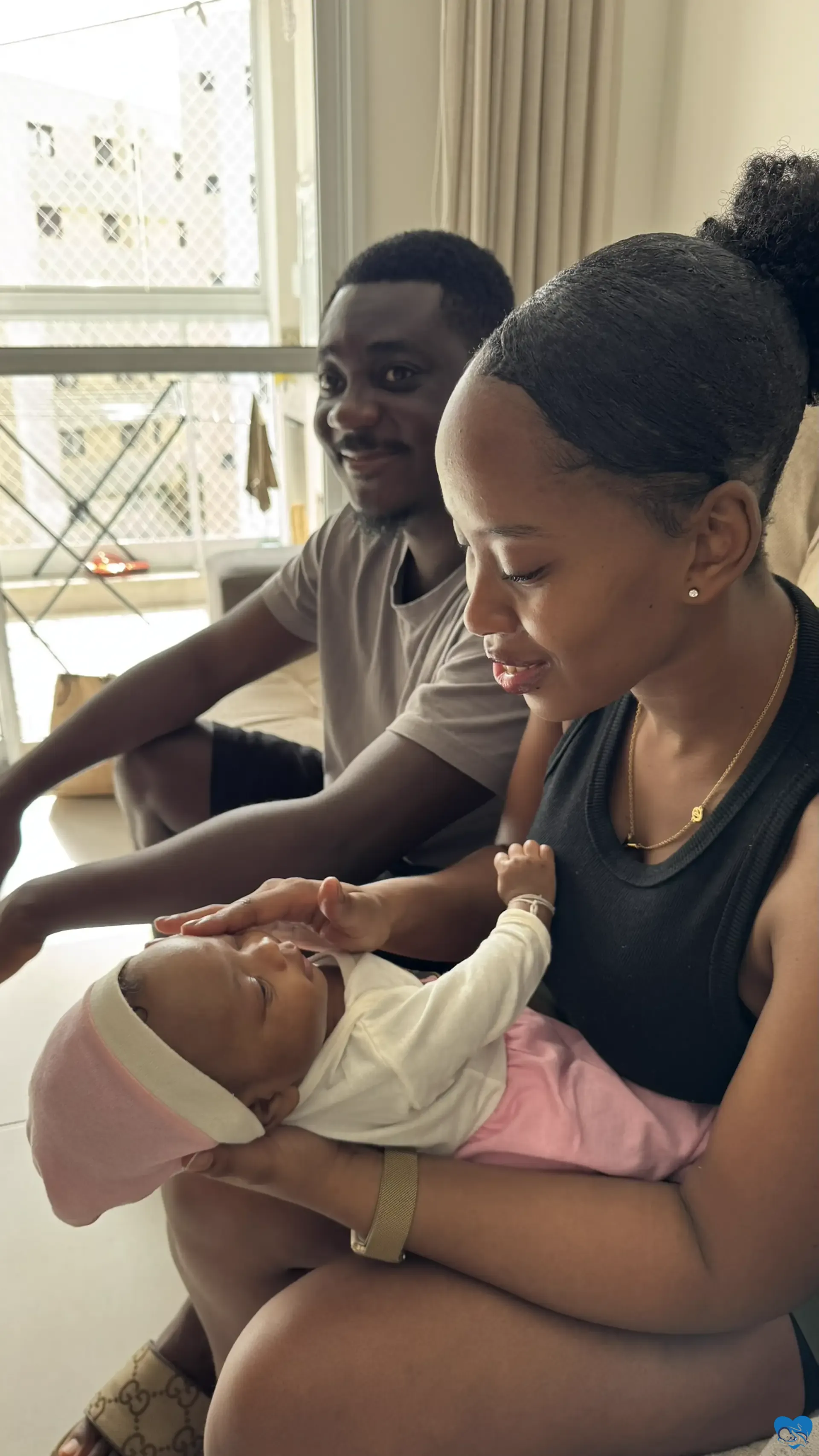
Eliana was born in Brazil in late December. The family stayed in the hospital while the baby was examined and monitored, and then returned home to begin life as new parents.
“It was beautiful. Everybody was good.” — Thato
The part many families underestimate: after the hospital
The most honest part of Emmanuel and Thato’s story is what happened after the hospital.
Many families spend months preparing for the birth and almost no time preparing for the first week after birth. They imagine that once the baby is born, the hardest part is over. In reality, for first-time parents, the first days at home can be the most overwhelming part of the journey.
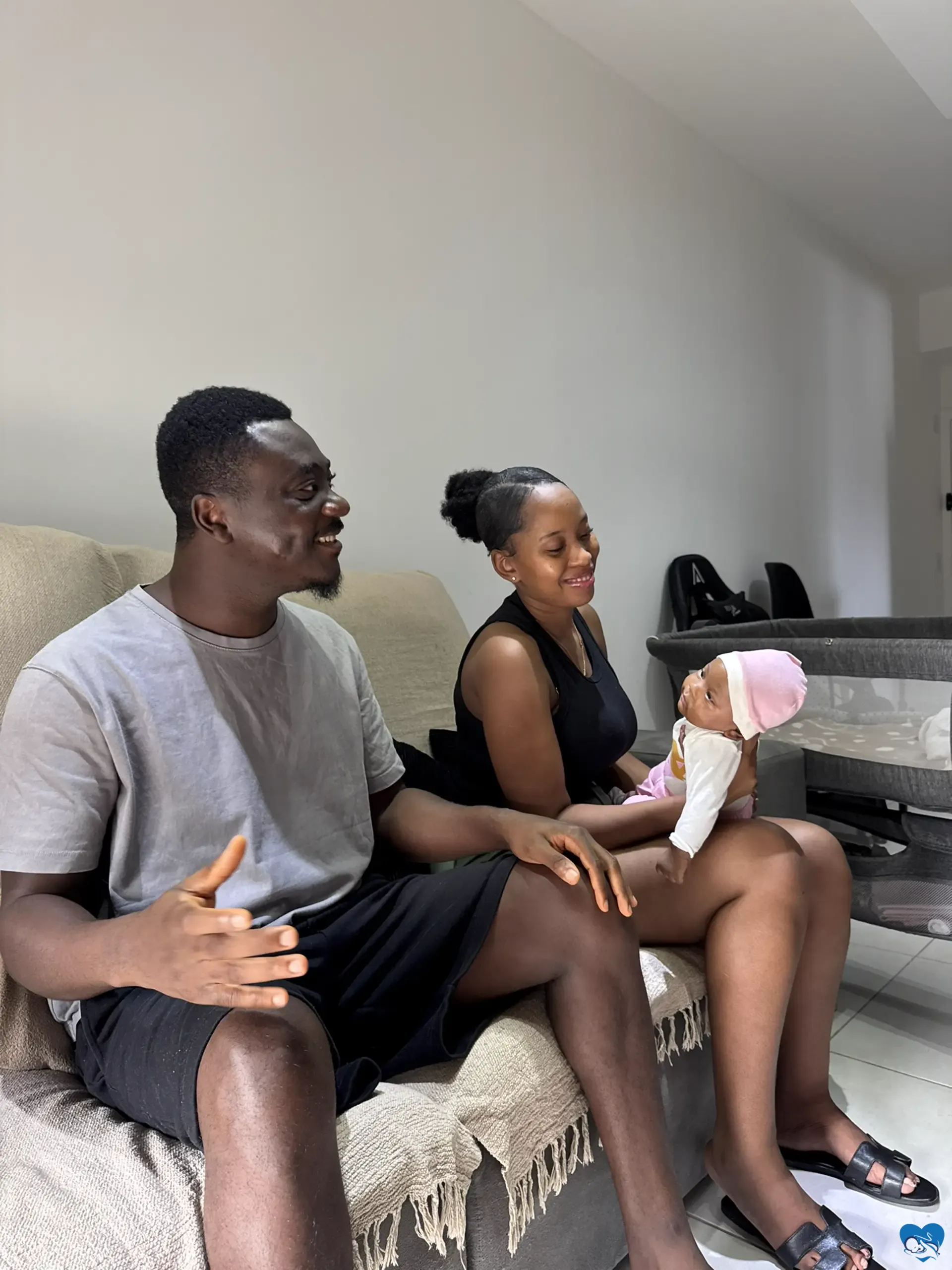
Emmanuel and Thato had never cared for a newborn before. They returned home with joy, but also anxiety, exhaustion and many questions. A newborn cries, feeds, sleeps, wakes and changes constantly. New parents do not always know whether the baby is hungry, uncomfortable, in pain, overstimulated or simply adjusting to the world.
Thato made an important point in the interview: not every mother instantly knows what to do, and not every bond forms in exactly the same way. Some mothers feel pressure to be perfect immediately. Some feel overwhelmed. Some feel anxious. Some simply need practical help without judgment.
Emmanuel helped by creating a night routine. He cared for Eliana during the first part of the night, and Thato took over early in the morning. That teamwork helped them survive the first week.
Their strongest lesson for future families was clear: postpartum support should be planned before the baby arrives.
For families planning birth abroad, postpartum preparation should include practical questions before delivery: who can help at home, where to find breastfeeding support, how the mother will recover, which pediatrician is available and what to do if the baby needs specialist care.
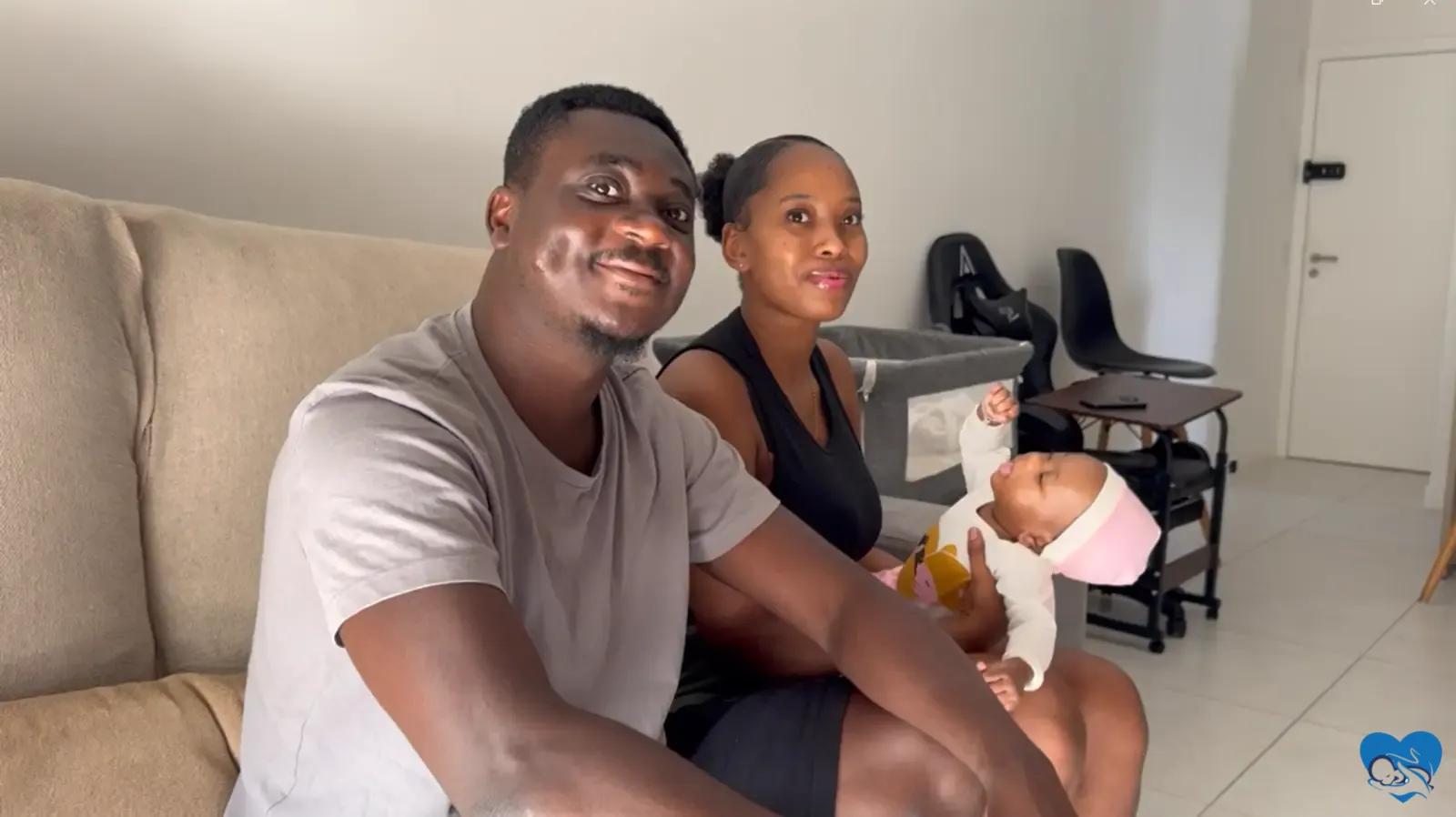
A real postpartum challenge: feeding and specialist care
Soon after birth, the family faced an unexpected feeding challenge. Eliana had difficulty latching, and the family learned that she needed specialist evaluation for a tongue-related issue. In their previous experience, they expected this to be handled differently. In Brazil, they were referred to a specialist who works with babies’ mouths.
This was an extra step and an extra cost, but it also showed how specialised care can work in Brazil. Because feeding was urgent and Eliana was small, Emmanuel moved quickly and found a specialist in Jurerê. The issue was handled soon after birth, with follow-up care afterwards.
Their experience shows that even when the birth goes well, a baby may need additional care. A complete plan should consider pediatrician access, lactation guidance and newborn support alongside the obstetrician and hospital.
This continuity before, during and after birth helped the family respond quickly when an unexpected feeding problem appeared.
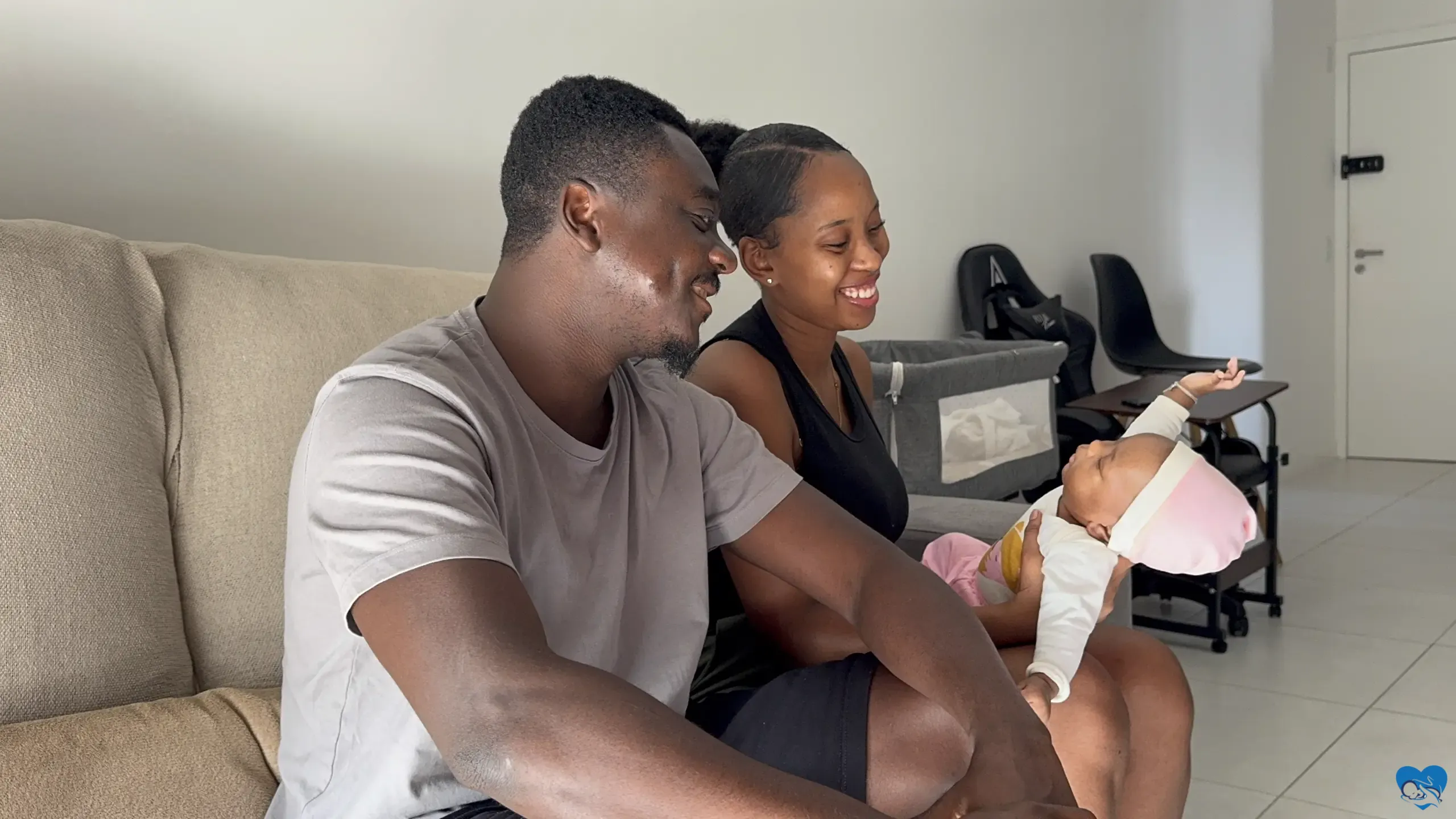
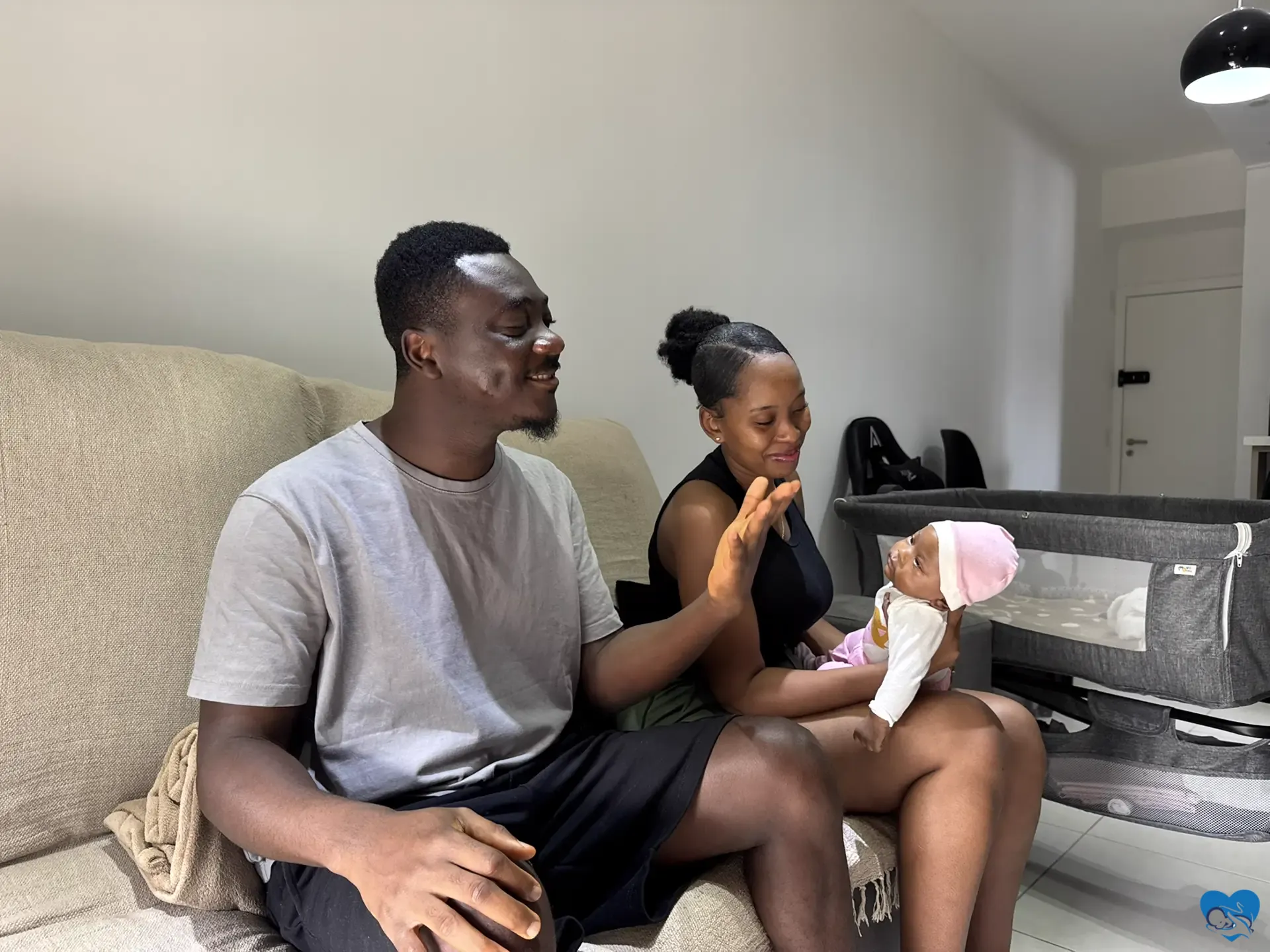
Breastfeeding, bottles and newborn support
One of Thato’s strongest recommendations for future families was breastfeeding support. New mothers may need help with latching, bottle choice, anti-colic options, pumping, formula questions, lactation nutrition and how to hold the baby comfortably.
Many modern parents learn from YouTube and TikTok, but every mother and every baby is different. A video cannot see the baby. It cannot see the mother’s body, her pain, her anxiety, her position or the exact way the baby is feeding. Sometimes a trained person beside the mother can do more in one calm session than hours of online searching.
Eventually, the family brought Thato’s mother from South Africa to help. For South African citizens, travel to Brazil was easier, and her mother could come quickly. But Thato pointed out that not every family can bring a relative to Brazil.
For first-time parents, postpartum and newborn-care planning is worth discussing early. Depending on availability and medical needs, this can include pediatrician access, lactation guidance, pelvic physiotherapy and other qualified professional support.
Doulas, pelvic physiotherapists, lactation consultants and postpartum specialists can complement medical care when a family needs additional support.
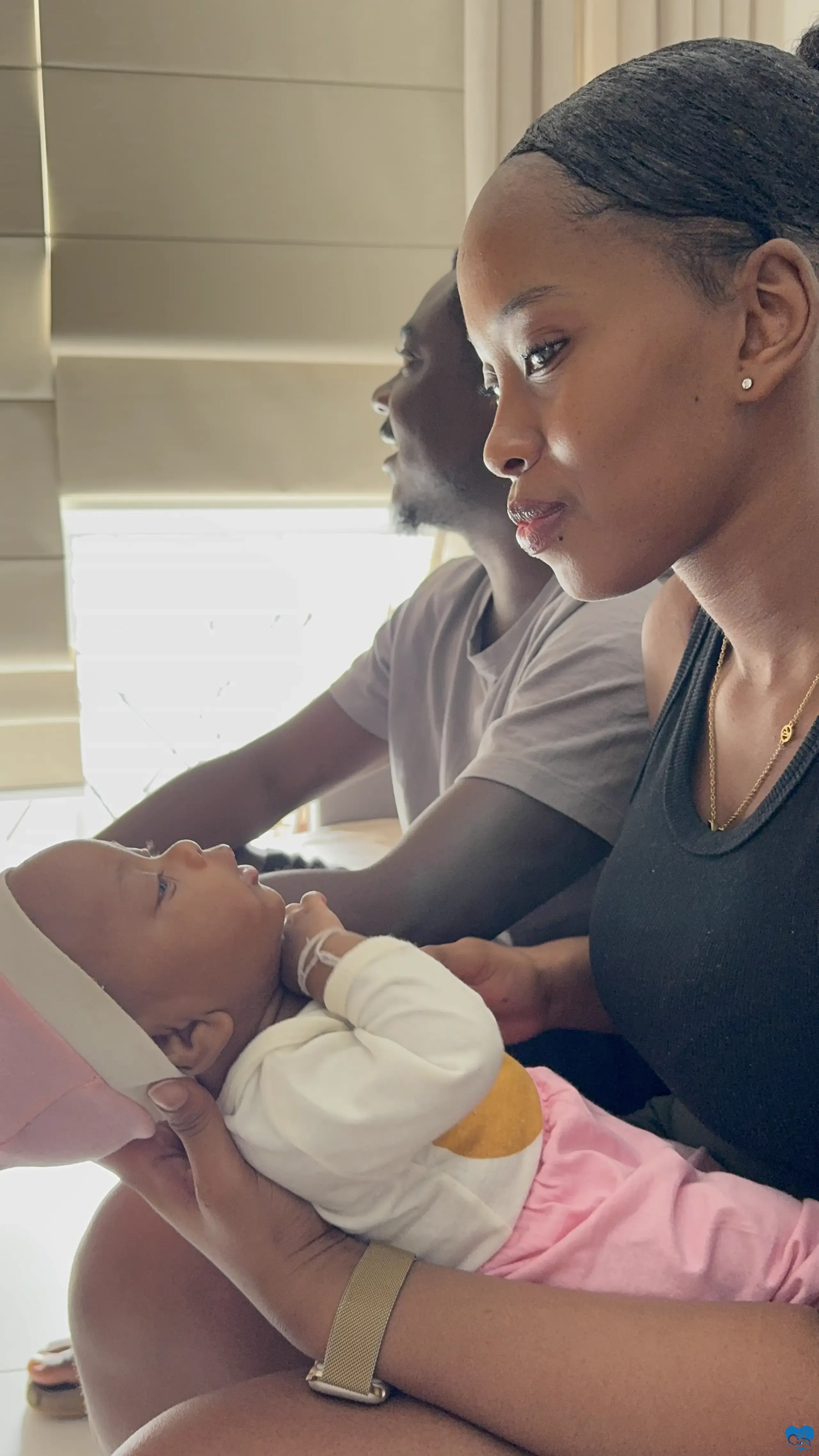
Documents after birth: the second journey
From the first WhatsApp messages, Emmanuel was thinking beyond the birth. He wanted to understand baby registration, CPF, passport guidance, apostille or embassy steps, and the family’s possible legal pathway after having a Brazilian child.
For international families, this part is often confusing. The baby may be born in Brazil, but the family still needs to complete the correct official process. Depending on the family, the post-birth journey may include birth registration, Brazilian birth certificate, CPF, Brazilian passport guidance, translations, legalisations, consular steps for the parents’ home country, and possible residency applications for parents.
Every family’s situation is different. Nationality, marital status, visa situation, birth certificates, criminal records, embassy rules, translations and appointment timing can all affect the process.
In Emmanuel’s case, there was additional nationality-specific complexity. Documents connected to Nigeria may require embassy or legalisation handling rather than a simple apostille route. This is exactly why document planning should start before birth.
A family may think the process is “just paperwork,” but small details can delay everything: names on certificates, proof of address, CPF, translations, police clearance, consular rules and official appointment timing.
BabyInBrazil coordinated legal guidance and document preparation for the family’s post-birth pathway, including birth registration, the baby’s CPF and passport guidance, and support with the parents’ residency process. Official outcomes depend on each family’s documents and the requirements of the relevant authorities.
This careful approach gave the family a clearer understanding of what was possible, which documents were required and which steps depended on official authorities.
Citizenship and the parents’ legal pathway
In general, a baby born on Brazilian soil is Brazilian by birth, with the constitutional exception for children of foreign parents who are serving their country in Brazil. The family still has to complete the correct birth registration and documentation process.
Parents of a Brazilian child may also have a legal pathway to apply for residency in Brazil, depending on their family situation, documents and the rules in force.
BabyInBrazil coordinated this part of the journey with qualified legal support. The relevant authorities make the final decisions, and every outcome depends on nationality, documents, legalisation, translations and appointment requirements.
For international families, clear limits and accurate explanations are an essential part of trustworthy support.
Daily-life support: the concierge side of BabyInBrazil
One of the most powerful parts of this case is that support did not stay inside the clinic. Emmanuel and Thato needed help with the everyday reality of arriving in Brazil: housing guidance, local adaptation, Portuguese, supermarkets, baby items, clinics, pharmacies, car issues, document questions and practical explanations of how things work.
These details may look small from the outside, but for a pregnant family they are huge. Knowing where to buy groceries, how to communicate at a clinic, where to find baby products, how to move around the city or who to message when something feels confusing can change the whole emotional experience.
Thato remembered one moment when the family had a car and petrol issue and did not understand the local rules. Dr. Diego came quickly to help. For her, that moment showed that the family was treated as a priority rather than just another case.
“What I really appreciate with Baby in Brazil is that you are a priority to them.” — Thato
For Thato, that moment captured the value of practical support: when something unexpected happened, the family knew whom to contact and received help quickly.
What makes BabyInBrazil different
In Emmanuel and Thato’s case, BabyInBrazil connected medical care, birth preparation, legal guidance, relocation support and postpartum planning in one coordinated pathway.
The medical side is led by real qualified professionals, with Dr. Diego Di Marco as obstetrician and medical co-founder. This gives clients direct medical trust, not only administrative coordination.
The birth support side includes preparation, hospital coordination, doula support and a focus on the mother’s emotional safety.
The medical side is led by qualified professionals, with Dr. Diego Di Marco as obstetrician and medical co-founder. This gives families direct medical leadership, not only administrative coordination.
The relocation side includes housing guidance, local orientation, Portuguese help and practical support in Florianópolis.
The postpartum side includes an honest understanding that the first days after birth can be difficult and should be planned before the baby arrives.
The communication side is built around WhatsApp, because families need fast, human contact before and after arrival.
This is the full model: doctor + hospital + doula + legal + documents + housing + postpartum + WhatsApp support.
What international families should prepare before arrival
Every family is different, but Emmanuel and Thato’s story gives other international families a clear starting point. Before travelling to Brazil for birth, families should discuss their timeline, flight timing, visa or entry situation, medical records, previous births or C-sections, preferred birth style, budget, city choice, housing, documents, translations, apostille or embassy legalisation, proof of address, CPF planning, postpartum support and return-travel expectations.
Families should also think about daily life: how they will communicate in Portuguese, how they will get to appointments, where they will stay, who will help in the first week after birth, what baby items they need and how they will handle unexpected newborn issues.
For many families, the most dangerous assumption is believing that everything starts at the hospital. In reality, the success of the birth-abroad journey depends on planning before arrival and support after discharge.
A useful first consultation therefore needs to be personalised around the family’s nationality, pregnancy stage, medical history, city, documents and timeline.
Download the BabyInBrazil Guide for Moms and Dads
Practical companion material for families planning pregnancy, childbirth, documents and the first days with a baby in Brazil.
Download PDFFrequently asked questions
-
Can foreigners give birth in Brazil?
Yes. Foreign parents can give birth in Brazil. Entry requirements depend on nationality and visa rules, so families should check their legal stay, passport validity, airline pregnancy rules and medical timeline before arrival.
-
Does a baby born in Brazil receive Brazilian citizenship?
In general, a baby born on Brazilian soil is Brazilian by birth, except for the constitutional exception involving foreign parents who are serving their country in Brazil. Families must still complete the correct birth registration and document process after birth.
-
Can parents apply for residency after having a baby in Brazil?
Parents of a Brazilian child may have a legal pathway to apply for residency in Brazil, depending on the applicable rules, family situation and documents. This should be reviewed with qualified legal support.
-
Why did Emmanuel and Thato choose Florianópolis?
They wanted a calmer, family-friendly environment with access to private maternity care, a trusted obstetrician, local support, Portuguese help and a safer daily-life feeling during pregnancy and postpartum.
-
What support did BabyInBrazil provide in this case?
BabyInBrazil coordinated medical planning, birth preparation, doula support, local guidance, Portuguese and adaptation support, housing guidance, pediatrician access, baby document guidance and legal coordination.
-
What was the hardest part for the family?
The hardest parts were adapting to Portuguese, understanding daily life without CPF at the beginning, preparing documents and managing the first days with a newborn as first-time parents.
-
Should families plan postpartum support before birth?
Yes. This case shows that the first days after birth can be the hardest, especially for first-time parents abroad. Newborn care, breastfeeding, lactation support and maternal recovery should be discussed before arrival.
-
Is this article medical, legal or immigration advice?
No. This is a real family story shared for educational purposes. Pregnancy care, birth planning, documents and residency options depend on each family’s medical history, nationality, visa status and personal documents. Families should always consult qualified medical and legal professionals before making decisions.
Key takeaways from Emmanuel and Thato’s story
Emmanuel and Thato did not need only a hospital. They needed a trusted obstetrician, a safe city, a personalised birth plan, natural-birth preparation, doula support, Portuguese help, housing guidance, baby document planning, legal guidance, postpartum support and someone local to call when they did not know what to do.
Their experience shows the value of connecting medical care, legal guidance, relocation and family support instead of treating each part as a separate service.
It also shows why future families should start early. The best experience is not created on the day of birth. It is built through planning, trust, communication and the right professional network before the family arrives.
Planning to give birth in Brazil?
Every family is different. Your nationality, visa status, pregnancy stage, medical needs, preferred birth style, budget, documents and timeline all matter.
BabyInBrazil helps international families build a personalised birth plan in Brazil, including doctor and hospital coordination, prenatal care, natural birth or C-section planning, doula and translation support, housing and relocation guidance, Portuguese and local adaptation support, baby documents after birth, legal guidance for parents’ next steps, postpartum planning and family concierge support.
If you are considering giving birth in Brazil, the best first step is to speak with the team and understand your personal timeline.
Message BabyInBrazil on WhatsApp and build your Brazil birth plan.
Medical and legal disclaimer
This article is a real family story shared for educational and informational purposes. It is not medical, legal or immigration advice. Pregnancy care, birth planning, documents, citizenship and residency options depend on each family’s medical history, nationality, visa status and personal documents. Always consult qualified medical and legal professionals before making decisions.